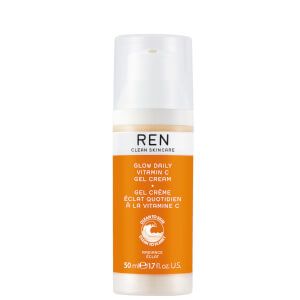
Ren Skincare Vitamin C Gel Cream

Ren Skincare Vitamin C Gel Cream

Efficacy75/100IrritancyHigh
Edit

Works for

3 of 3 advertised claims delivered

Moisturizing
Helianthus annuus seed oil, Hippophae rhamnoides oil + 7 more
Good evidence
What the product description says
“What it is A lightweight moisturizer that delivers an immediate glow with visibly brighter, firmer, and plumped skin.”
Source: Sephora CA

This product can help improve hydration of the skin with the two types of ingredients.

The first type is called “humectants”:
these ingredients help attract water. When humectants are on the surface of the skin, they “pull in” the moisture from the outside environment, or from within deeper layers of the skin. The following ingredients in this product do the job: glycerin, glycogen.

This product also contains ingredients called “occlusives”. They help reduce the speed with which our skin loses moisture to the outside environment. These ingredients also help soften the upper layer of the skin, so it feels less tight and nicer to the touch. The following ingredients in this product do the job: helianthus annuus seed oil, hippophae rhamnoides oil.

Helianthus annuus seed oilKey active· Emollient, OcclusiveEffect: HighA great emollient due to its high linoleic acid content. One of the most effective plant oils in helping skin hydration and repairing skin barrier function~0.15–0.5%
Hippophae rhamnoides oilKey active· EmollientEffect: HighA good emollient. Contains various ingredients including vitamins and fatty acids that could work in the skin to neutralize free radicals and minimize moisture loss - if enough of these compounds is able to penetrate the skin in an active form.~0.35–0.85%
GlycogenKey active· HumectantEffect: HighHelps attract water to the upper layer of the skin~0.35–0.85%
GlycerinKey active· HumectantEffect: HighOne of the best moisturizing ingredients. Naturally present in skin. It attracts water to the upper layer of the skin working as a humectant~3.6–5.3%
Cetearyl alcoholKey active· EmollientEffect: MediumA non-drying alcohol. Works as an emollient. Helps water and oil mix together and creates a nice product texture~2.1–3.1%
GlucoseKey active· HumectantEffect: MediumHelps attract water to the upper layer of the skin. Could be helpful in restoring the skin barrier function~0.1–0.45%
Lauryl laurateEffect: LowHelps soften the upper layer of the skin~2.8–4.2%
Cetearyl ethylhexanoate· EmollientEffect: LowAn emollient that helps soften the skin~5.1–7.6%
TocopherolEffect: Low, below effective dosePure form of vitamin E. Can help moisturise and protect the skin from free radicals. Often used to help stabilise other ingredients or the formula itself~0.3–0.75%
Anti-aging
Ascorbyl glucoside, Magnesium ascorbyl phosphate + 1 more
Moderate evidence
What the product description says
“Skin Care Concerns Home Skin Ceuticals Medical Skincare Dermatologist approved Teen & Pre-Teen Acne & Blemishes Fine Lines & Wrinkles Visible Pores Dark Circles & Puffiness Dull Skin Dry Skin Oily Skin Combination Skin Redness Pigmentation Dehydrated Skin Sensitive Skin”
Source: Cultbeauty

This product contains ascorbyl glucoside. This ingredient might be able to help reduce and prevent fine lines and wrinkles, improve skin elasticity and firmness, but there is not enough evidence that it actually works.

Ascorbyl glucosideKey activeEffect: MediumA vitamin C derivative that is more stable but less potent than pure form of vitamin C. Has a potential to boost collagen production, nutralise free radicals and reduce hyperpigmentation, but the required concentration is likely to be much higher than for the pure form of vitamin C, limiting the ingredient's effectiveness in products~1.6–2.3%
Magnesium ascorbyl phosphateEffect: Low, below effective doseA derivative of vitamin C that is more stable, but less bioavailable than the pure form of vitamin C. It does not penetrate the skin well, but has been shown to convert to pure vitamin C once in skin. It can be helpful in stimulating collagen production and lightening the skin tone, but the required concentration is likely to be very high~0.15–0.6%
TocopherolEffect: Low, below effective dosePure form of vitamin E. Can help moisturise and protect the skin from free radicals. Often used to help stabilise other ingredients or the formula itself~0.3–0.75%
Evens skin tone
Ascorbyl glucoside, Magnesium ascorbyl phosphate
Moderate evidence
What the product description says
“Skin Type Normal, Dry, Combination, and Oily Skincare Concerns Dryness, Dullness, and Uneven Texture Formulation Cream Highlighted Ingredients , Vitamin C Brightens the complexion. , Magnesium Nourishes skin.”
Source: Sephora CA

The following ingredient (ingredients) in this product might be helpful, but there is no evidence to confirm that it actually works: ascorbyl glucoside.

Ascorbyl glucosideKey activeEffect: MediumA vitamin C derivative that is more stable but less potent than pure form of vitamin C. Has a potential to boost collagen production, nutralise free radicals and reduce hyperpigmentation, but the required concentration is likely to be much higher than for the pure form of vitamin C, limiting the ingredient's effectiveness in products~1.6–2.3%
Magnesium ascorbyl phosphateEffect: Low, below effective doseA derivative of vitamin C that is more stable, but less bioavailable than the pure form of vitamin C. It does not penetrate the skin well, but has been shown to convert to pure vitamin C once in skin. It can be helpful in stimulating collagen production and lightening the skin tone, but the required concentration is likely to be very high~0.15–0.6%
Anti-oxidation
Not advertised by the brand · Ascorbyl glucoside, Hippophae rhamnoides oil + 3 more
Moderate evidence

This product contains antioxidants (ascorbyl glucoside) that might be able to help neutralize free radicals in skin to lessen the damage it gets from the UV light (sun). There is not enough evidence to confirm their effectiveness in skin though.

Ascorbyl glucosideKey activeEffect: MediumA vitamin C derivative that is more stable but less potent than pure form of vitamin C. Has a potential to boost collagen production, nutralise free radicals and reduce hyperpigmentation, but the required concentration is likely to be much higher than for the pure form of vitamin C, limiting the ingredient's effectiveness in products~1.6–2.3%
Hippophae rhamnoides oilEffect: LowA good emollient. Contains various ingredients including vitamins and fatty acids that could work in the skin to neutralize free radicals and minimize moisture loss - if enough of these compounds is able to penetrate the skin in an active form.~0.35–0.85%
TocopherolUnder-dosedEffect: HighPure form of vitamin E. Can help moisturise and protect the skin from free radicals. Often used to help stabilise other ingredients or the formula itself~0.3–0.75%
Rosmarinus officinalis leaf extractEffect: Low, below effective doseCan be helpful in reducing inflammation in skin, including inflamed acne. It can be irritating~0.1–0.35%
Magnesium ascorbyl phosphateEffect: Low, below effective doseA derivative of vitamin C that is more stable, but less bioavailable than the pure form of vitamin C. It does not penetrate the skin well, but has been shown to convert to pure vitamin C once in skin. It can be helpful in stimulating collagen production and lightening the skin tone, but the required concentration is likely to be very high~0.15–0.6%

Can it cause trouble?

Irritancy
9 strong irritants: Citrus grandis peel oil, Citrus aurantium dulcis flower oil + 7 more — patch-test recommended
High risk
We flagged 16 ingredients with irritancy potential. Severity depends on your sensitivity threshold; the table lists the worst offenders first.
IngredientFunctionIrritationEst. amount
Citrus grandis peel oilA plant oil with high content of volatile compounds that, especially when exposed to air, can cause allergic reactions and irritate the skinHigh~0.4–0.9%est.
Hippophae rhamnoides oilA good emollient. Contains various ingredients including vitamins and fatty acids that could work in the skin to neutralize free radicals and minimize moisture loss - if enough of these compounds is able to penetrate the skin in an active form.High~0.35–0.85%est.
ParfumAn aromatic blend of unspecified and possibly irritating ingredientsHigh~0.2–0.8%est.
Citrus nobilis peel oilA plant oil with high content of volatile compounds that, especially when exposed to air, can cause allergic reactions and irritate the skinHigh~0.15–0.7%est.
Citrus tangerina peel oilEssential oil that can be irritating. Can lead to photosensitivityHigh~0.15–0.65%est.
Rosmarinus officinalis leaf extractCan be helpful in reducing inflammation in skin, including inflamed acne. It can be irritatingHigh~0.1–0.35%est.
CitralA fragrance with a lemon scent. A likely irritantHigh~0.05–0.3%est.
LimoneneA common frangrance that can easily irritate skin, especially if exposed to air, light or heatHigh~0.05–0.25%est.
LinaloolA fragrance. Can be irritatingHigh~0.05–0.15%est.
Lauryl laurateHelps soften the upper layer of the skinMedium~2.8–4.2%est.
Tapioca starchUsed to create a thicker product consistencyMedium~1.7–2.6%est.
Ascorbyl glucosideA vitamin C derivative that is more stable but less potent than pure form of vitamin C. Has a potential to boost collagen production, nutralise free radicals and reduce hyperpigmentation, but the required concentration is likely to be much higher than for the pure form of vitamin C, limiting the ingredient's effectiveness in productsMedium~1.6–2.3%est.
HydroxyacetophenoneUsed to increase effectiveness of preservativesMedium~1.3–1.9%est.
Cetearyl glucosideHelps water and oil in the product mix well together and improves product textureMedium~0.5–1.2%est.
Magnesium ascorbyl phosphateA derivative of vitamin C that is more stable, but less bioavailable than the pure form of vitamin C. It does not penetrate the skin well, but has been shown to convert to pure vitamin C once in skin. It can be helpful in stimulating collagen production and lightening the skin tone, but the required concentration is likely to be very highMedium~0.15–0.6%est.
Comedogenic
1 ingredient rated 2 or more on the 0–5 pore-clogging scale
1 flagged
These ingredients have a comedogenic rating of 2 or more on a 0–5 scale; the table shows each one's rating. In leave-on products they can clog pores in acne-prone skin.
IngredientFunctionRatingEst. amount
Cetearyl alcoholA non-drying alcohol. Works as an emollient. Helps water and oil mix together and creates a nice product texture2/5~2.1–3.1%est.
Edit

User reviews

Would you recommend?
No community reviews yet.

Be the first — your take helps the next person decide.

Write a review · ~30s

Ingredients

Filter by role to see what each ingredient is doing.

Water~40–60%
Formula
Irritation risk
Low

Plain old water

More about Water
Cetearyl ethylhexanoate~5.1–7.6%
Formula
Irritation risk
Low
Works for
Moisturizing

An emollient that helps soften the skin

More about Cetearyl ethylhexanoate
Glycerin~3.6–5.3%
Key active
Irritation risk
Low
Works for
Moisturizing

One of the best moisturizing ingredients. Naturally present in skin. It attracts water to the upper layer of the skin working as a humectant

More about Glycerin
Lauryl laurate~2.8–4.2%
Irritant · medium
Irritation risk
Medium
Works for
Moisturizing

Helps soften the upper layer of the skin

More about Lauryl laurate
Cetearyl alcohol~2.1–3.1%
Key activeComedogenic 2/5
Irritation risk
Low
Comedogenicity
2/5
Works for
CleansingMoisturizing

A non-drying alcohol. Works as an emollient. Helps water and oil mix together and creates a nice product texture

More about Cetearyl alcohol
Tapioca starch~1.7–2.6%
Irritant · medium
Irritation risk
Medium

Used to create a thicker product consistency

More about Tapioca starch
Ascorbyl glucoside~1.6–2.3%
Key activeIrritant · medium
Irritation risk
Medium
Works for
Evens skin toneAnti-agingAnti-oxidation

A vitamin C derivative that is more stable but less potent than pure form of vitamin C. Has a potential to boost collagen production, nutralise free radicals and reduce hyperpigmentation, but the required concentration is likely to be much higher than for the pure form of vitamin C, limiting the ingredient's effectiveness in products

More about Ascorbyl glucoside
Hydroxyacetophenone~1.3–1.9%
Irritant · medium
Irritation risk
Medium

Used to increase effectiveness of preservatives

More about Hydroxyacetophenone
Carbomer~1–1.6%
Formula
Irritation risk
Low
Works for
Cleansing

Helps create a thicker or gel-like product texture. It is not a surfactant but can be used in gentle cleansing formulations

More about Carbomer
Phenoxyethanol~0.5–1%
Formula
Irritation risk
Low

A preservative. It helps prevent bacterial growth in cosmetic products

More about Phenoxyethanol
Cetearyl glucoside~0.5–1.2%
Irritant · medium
Irritation risk
Medium
Works for
Cleansing

Helps water and oil in the product mix well together and improves product texture

More about Cetearyl glucoside
Citrus grandis peel oil~0.4–0.9%
Irritant · high
Irritation risk
High

A plant oil with high content of volatile compounds that, especially when exposed to air, can cause allergic reactions and irritate the skin

More about Citrus grandis peel oil
Glycogen~0.35–0.85%
Key active
Irritation risk
Low
Works for
Moisturizing

Helps attract water to the upper layer of the skin

More about Glycogen
Hippophae rhamnoides oil~0.35–0.85%
Key activeIrritant · high
Irritation risk
High
Works for
MoisturizingAnti-oxidation

A good emollient. Contains various ingredients including vitamins and fatty acids that could work in the skin to neutralize free radicals and minimize moisture loss - if enough of these compounds is able to penetrate the skin in an active form.

More about Hippophae rhamnoides oil
Citrus aurantium dulcis flower oil~0.3–0.7%
Irritant · high
Parfum~0.2–0.8%
Irritant · high
Irritation risk
High

An aromatic blend of unspecified and possibly irritating ingredients

More about Parfum
Tocopherol~0.3–0.75%
Under-dosed
Irritation risk
Low
Works for
Anti-oxidationAnti-inflammatoryMoisturizingAnti-aging

Pure form of vitamin E. Can help moisturise and protect the skin from free radicals. Often used to help stabilise other ingredients or the formula itself

More about Tocopherol
Citrus nobilis peel oil~0.15–0.7%
Irritant · high
Irritation risk
High

A plant oil with high content of volatile compounds that, especially when exposed to air, can cause allergic reactions and irritate the skin

More about Citrus nobilis peel oil
Citrus tangerina peel oil~0.15–0.65%
Irritant · high
Irritation risk
High

Essential oil that can be irritating. Can lead to photosensitivity

More about Citrus tangerina peel oil
Magnesium ascorbyl phosphate~0.15–0.6%
Irritant · medium
Irritation risk
Medium
Works for
Evens skin toneAnti-agingAnti-oxidation

A derivative of vitamin C that is more stable, but less bioavailable than the pure form of vitamin C. It does not penetrate the skin well, but has been shown to convert to pure vitamin C once in skin. It can be helpful in stimulating collagen production and lightening the skin tone, but the required concentration is likely to be very high

More about Magnesium ascorbyl phosphate
Diglucosyl gallic acid~0.15–0.55%
Formula
Ammonium bicarbonate~0.1–0.5%
Formula
Glucose~0.1–0.45%
Key active
Irritation risk
Low
Works for
Moisturizing

Helps attract water to the upper layer of the skin. Could be helpful in restoring the skin barrier function

More about Glucose
Helianthus annuus seed oil~0.15–0.5%
Key active
Irritation risk
Low
Works for
Moisturizing

A great emollient due to its high linoleic acid content. One of the most effective plant oils in helping skin hydration and repairing skin barrier function

More about Helianthus annuus seed oil
Rosmarinus officinalis leaf extract~0.1–0.35%
Irritant · high
Irritation risk
High
Works for
Anti-blemishAnti-oxidationAntibacterial

Can be helpful in reducing inflammation in skin, including inflamed acne. It can be irritating

More about Rosmarinus officinalis leaf extract
Sodium hydroxide~0.1–0.35%
Formula
Irritation risk
Low

Used to adjust the product's pH

More about Sodium hydroxide
Citral~0.05–0.3%
Irritant · high
Irritation risk
High

A fragrance with a lemon scent. A likely irritant

More about Citral
Limonene~0.05–0.25%
Irritant · high
Irritation risk
High

A common frangrance that can easily irritate skin, especially if exposed to air, light or heat

More about Limonene
Linalool~0.05–0.15%
Irritant · high
Irritation risk
High

A fragrance. Can be irritating

More about Linalool
Parfum~0.05–0.15%
Irritant · high
Irritation risk
High

An aromatic blend of unspecified and possibly irritating ingredients

More about Parfum
Ingredient list view

Water, Cetearyl ethylhexanoate, Glycerin, Lauryl laurate, Cetearyl alcohol, Tapioca starch, Ascorbyl glucoside, Hydroxyacetophenone, Carbomer, Phenoxyethanol, Cetearyl glucoside, Citrus grandis peel oil, Glycogen, Hippophae rhamnoides oil, Citrus aurantium dulcis flower oil, Parfum, Tocopherol, Citrus nobilis peel oil, Citrus tangerina peel oil, Magnesium ascorbyl phosphate, Diglucosyl gallic acid, Ammonium bicarbonate, Glucose, Helianthus annuus seed oil, Rosmarinus officinalis leaf extract, Sodium hydroxide, Citral, Limonene, Linalool, Parfum

Compare prices

Retailers ranked by price — lowest first.

Amazon US
Price unavailable
Check
Amazon US
Price unavailable
Check

Affiliate links · prices updated regularly · As an Amazon Associate, WIMJ earns from qualifying purchases.

Cheaper alternatives? See how this stacks up against similar formulas.
We compare ingredient profiles across our catalog — pick the closest match for your budget.
Open dupe finder

Sources cited in this review

Every concentration estimate and effectiveness label is anchored to one of these 18 studies and safety reviews.

  1. 1
  2. 2
  3. 3
  4. 4
    Vitamin E in dermatologyncbi.nlm.nih.gov
  5. 5
    Vitamin E and Skin Healthlpi.oregonstate.edu
  6. 6
Ren Skincare Vitamin C Gel Cream
Ren SkincareVitamin C Gel Cream

Affiliate links · As an Amazon Associate, WIMJ earns from qualifying purchases.

As an Amazon Associate, WIMJ earns from qualifying purchases.