Works for
1 of 1 advertised claim delivered
Moisturizing15 ingredients credited for this claimGood support
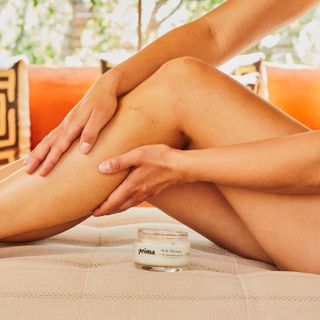
“Soothe and replenish dry, dehydrated skin with our luxurious body butter infused with hemp extract, five organic oils and butters, and an aromatic blend of citrus, clove, geranium and ylang ylang essential oils.”
This product can help improve hydration of the skin with the two types of ingredients.
The first type is called “humectants”:
these ingredients help attract water.
When humectants are on the surface of the skin, they “pull in” the moisture from the outside environment, or from
within deeper layers of the skin. The following ingredients in this product do the job:
glycerin.
This product also contains ingredients called “occlusives”. They help reduce the speed with which our skin loses moisture to the outside environment. These ingredients also help soften the upper layer of the skin, so it feels less tight and nicer to the touch. The following ingredients in this product do the job: butyrospermum parkii butter, cocos nucifera oil.
Anti-oxidationNot advertised by the brand · 4 ingredients credited for this claimModerate support
This product contains antioxidants (squalene) that might be able to help neutralize free radicals in skin to lessen the damage it gets from the UV light (sun). There is not enough evidence to confirm their effectiveness in skin though.
Can it cause trouble?
Irritancy11 strong irritants: Cananga odorata flower oil, Eugenia caryophyllus bud oil + 9 more — patch-test recommendedHigh risk
Comedogenic5 ingredients rated 2 or more on the 0–5 pore-clogging scale5 flagged
User reviews
Be the first — your take helps the next person decide.
Ingredients
Filter by role to see what each ingredient is doing.
Water~45–55%
Butyrospermum parkii butter~4.8–5.8%
- Irritation risk
- Low
- Comedogenicity
- 3/5
A great moisturising ingredient that softens the skin and reduces water loss from its upper layer. It also can be helpful in protecting skin from free radicals
More about Butyrospermum parkii butterCocos nucifera oil~4.2–5.1%
- Irritation risk
- Low
- Comedogenicity
- 3/5
An emollient. Found to be as effective as a moisturizer for dry skin as mineral oil. Could be comedogenic
More about Cocos nucifera oilGlycerin~3.2–3.9%
- Irritation risk
- Low
One of the best moisturizing ingredients. Naturally present in skin. It attracts water to the upper layer of the skin working as a humectant
More about GlycerinCetearyl alcohol~2.4–2.9%
- Irritation risk
- Low
- Comedogenicity
- 2/5
A non-drying alcohol. Works as an emollient. Helps water and oil mix together and creates a nice product texture
More about Cetearyl alcoholCetearyl olivate~2–2.4%
Cannabis sativa seed oil~1.7–2.1%
- Irritation risk
- Medium
A plant oil that due to its high linoleic acid content can help strengthen skin's barrier function and soften its upper layer
More about Cannabis sativa seed oilCetyl alcohol~1.5–1.8%
- Irritation risk
- Low
A non-drying alcohol that works to soften the skin and stabilize product formulations helping oil and water mix together
More about Cetyl alcoholOlea europaea fruit oil~1.2–1.5%
- Irritation risk
- Medium
An emollient that helps soften the skin but is not effective for restoring its barrier function. Might be helpful to calm down inflammation
More about Olea europaea fruit oilSimmondsia chinensis seed oil~1–1.2%
- Irritation risk
- Medium
Softens the upper layer of skin and helps restore the healthy skin barrier. Has shown to help calm down inflammation in skin. It is a stable oil, meaning that it retains its properties even when exposed to air.
More about Simmondsia chinensis seed oilGlyceryl stearate~0.7–1.1%
- Irritation risk
- Low
An emollient that softens the skin and forms a protective layer on its surface. Helps water and oil mix together
More about Glyceryl stearatePotassium cetyl phosphate~0.6–0.85%
- Irritation risk
- Medium
Helps oil and water mix together
More about Potassium cetyl phosphateSorbitan olivate~0.5–0.75%
Theobroma cacao seed butter~0.45–0.7%
- Irritation risk
- Low
- Comedogenicity
- 3/5
Helps soften the upper layer of the skin and can be helpful in restoring the skin barrier function. Might have some anti-oxidant effect
More about Theobroma cacao seed butterXanthan gum~0.4–0.65%
- Irritation risk
- Low
Used to create a thicker product consistency
More about Xanthan gumCannabis sativa flower/leaf/stem extract~0.35–0.65%
- Irritation risk
- Low
Potassium stearate~0.5–0.75%
Glyceryl distearate~0.4–0.6%
- Irritation risk
- Low
Stearic acid~0.45–0.7%
- Irritation risk
- Low
Helps oil and water mix together and works as an emollient
More about Stearic acidHelianthus annuus seed oil~0.3–0.55%
- Irritation risk
- Low
A great emollient due to its high linoleic acid content. One of the most effective plant oils in helping skin hydration and repairing skin barrier function
More about Helianthus annuus seed oilPhytosterols~0.3–0.55%
- Irritation risk
- Medium
Lipids that work as an emollient and can be helpful in repairing skin barrier function
More about PhytosterolsCananga odorata flower oil~0.25–0.4%
Eugenia caryophyllus bud oil~0.2–0.35%
Litsea cubeba fruit oil~0.2–0.35%
- Irritation risk
- High
An essential oil with a lemon-like smell that is extracted from a fruit grown in Asia. Used as a fragrance
More about Litsea cubeba fruit oilCitrus aurantium dulcis peel oil~0.2–0.4%
- Irritation risk
- High
An essentil oil from orange peel. Potential allergen and can be irritating
More about Citrus aurantium dulcis peel oilApium graveolens seed oil~0.2–0.35%
- Irritation risk
- Low
Pogostemon cablin oil~0.15–0.3%
- Irritation risk
- Low
Citrus nobilis peel oil~0.2–0.35%
- Irritation risk
- High
A plant oil with high content of volatile compounds that, especially when exposed to air, can cause allergic reactions and irritate the skin
More about Citrus nobilis peel oilThuja occidentalis leaf oil~0.2–0.35%
- Irritation risk
- Low
Citrus limon peel oil~0.2–0.35%
Mentha viridis leaf oil~0.2–0.4%
Cinnamomum cassia leaf oil~0.2–0.35%
Squalene~0.25–0.5%
- Irritation risk
- Low
- Comedogenicity
- 2/5
An oil that is naturally part of skin sebum that helps to soften its upper layer, reduce water loss and neutralize free radicals. It might be comedogenic. Avoid applying large concentrations (or pure oil) before sun exposure as oxidized squalene can clog pores and lead to skin irritation. Today squalene is mostly derived from vegetable oils or synthetized by yeast
More about SqualenePelargonium graveolens oil~0.2–0.4%
Juniperus virginiana wood oil~0.2–0.35%
- Irritation risk
- Low
Lavandula hybrida oil~0.2–0.4%
- Irritation risk
- High
Plant extract that can be irritating and is a known allergen
More about Lavandula hybrida oilAlcohol~0.2–0.35%
- Irritation risk
- High
Can be drying and contribute to skin irritation. Used in formulars to dissolve other ingredients, create a thinner product consistency or for its antibacterial properties
More about AlcoholCaprylhydroxamic acid~0.15–0.3%
Sodium hydroxide~0.15–0.25%
Sodium dehydroacetate~0.15–0.3%
Tocopherol~0.1–0.2%
- Irritation risk
- Low
Pure form of vitamin E. Can help moisturise and protect the skin from free radicals. Often used to help stabilise other ingredients or the formula itself
More about TocopherolIngredient list view
Water, Butyrospermum parkii butter, Cocos nucifera oil, Glycerin, Cetearyl alcohol, Cetearyl olivate, Cannabis sativa seed oil, Cetyl alcohol, Olea europaea fruit oil, Simmondsia chinensis seed oil, Glyceryl stearate, Potassium cetyl phosphate, Sorbitan olivate, Theobroma cacao seed butter, Xanthan gum, Cannabis sativa flower/leaf/stem extract, Potassium stearate, Glyceryl distearate, Stearic acid, Helianthus annuus seed oil, Phytosterols, Cananga odorata flower oil, Eugenia caryophyllus bud oil, Litsea cubeba fruit oil, Citrus aurantium dulcis peel oil, Apium graveolens seed oil, Pogostemon cablin oil, Citrus nobilis peel oil, Thuja occidentalis leaf oil, Citrus limon peel oil, Mentha viridis leaf oil, Cinnamomum cassia leaf oil, Squalene, Pelargonium graveolens oil, Unknown, Juniperus virginiana wood oil, Lavandula hybrida oil, Unknown, Alcohol, Caprylhydroxamic acid, Sodium hydroxide, Sodium dehydroacetate, Tocopherol
Compare prices
Retailers ranked by price — lowest first.
Sources cited in this review
Every concentration estimate and effectiveness label is anchored to one of these 19 studies and safety reviews.
- 1
- 2
- 3Hemp (Cannabis sativa L.) as a Resource for Green Cosmeticstandfonline.com
- 4Use of “natural” oils for moisturization: Review of olive, coconut, and sunflower seed oilonlinelibrary.wiley.com
- 5
- 6

Affiliate links · As an Amazon Associate, WIMJ earns from qualifying purchases.