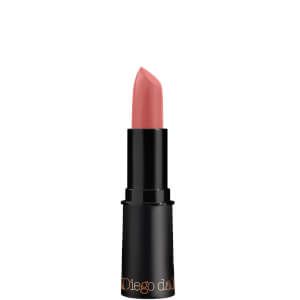
Diego Dalla Palma Lip Guard SPF 50 Protective Lip Balm
Works for
1 of 1 advertised claim delivered
Sun protectionSPF 50 · 5 UV filtersBroad spectrum
This product offers a good level of protection against both UVB and UVA rays.
This sunscreen uses organic (so-called "chemical") sunscreen filters. Organic, or "chemical" filters usually provide reliable sun protection and rarely leave a white cast. Sunscreens with organic filters can sting eyes.
This product can be considered "reef safe" because it does not contain the UV filters (oxybenzone and octinoxate) that can be harmful to coral reefs when present in the water in high concentrations.
Anti-agingNot advertised by the brand · 3 ingredients credited for this claimStrong support
This product can help prevent early signs of skin aging because it offers a good level of broad spectrum sun protection. Sun damage is the main cause of premature skin aging, and protecting your skin from the sun is the best anti-aging strategy.
MoisturizingNot advertised by the brand · 14 ingredients credited for this claimGood support
This product can help soften the skin and reduce its moisture loss with emollients and occlusives: bis-diglyceryl polyacyladipate-2, cera microcristallina.
Keep in mind that this product does not contain effective ingredients to attract water to the upper layer of the skin. This is why an additional product with humectants like glycerin or hyaluronic acid can be helpful (apply it before this product for the best results).
Can it cause trouble?
Irritancy9 strong irritants: Rosa moschata seed oil, Rosmarinus officinalis leaf extract + 7 more — patch-test recommendedHigh risk
Comedogenic1 ingredient rated 2 or more on the 0–5 pore-clogging scale1 flagged
User reviews
Be the first — your take helps the next person decide.
Ingredients
Filter by role to see what each ingredient is doing.
C12-15 alkyl benzoate~23–34%
- Irritation risk
- Low
Enhances the product texture and makes it more spreadable. Helps reduce water loss from the outer layer of skin. Extands the shelf life by preventing bacteria growth
More about C12-15 alkyl benzoateOctocrylene~4.5–6.7%
- Irritation risk
- Medium
A weak sunscreen that protects against the sun rays that cause sunburn (UVB) and is somewhat effective against the UVA rays. It is quite stable and can help stabilize other, more vulnerable, sunscreen ingredients like Avobenzone. It is an organic, or so called "chemical" sunscreen
More about OctocryleneBis-ethylhexyloxyphenol methoxyphenyl triazine~4.6–6.9%
- Irritation risk
- Medium
Tinosorb S. One of the most effective broad spectrum sunscreen ingredients. Protects from both UVA and UVB rays. It is photostable. Unfortunately, not approved by FDA (US) yet.
More about Bis-ethylhexyloxyphenol methoxyphenyl triazineBis-diglyceryl polyacyladipate-2~3.9–5.9%
- Irritation risk
- Low
Helps soften the upper layer of the skin and reduce water loss from its surface
More about Bis-diglyceryl polyacyladipate-2Polybutene~2.6–4%
Titanium dioxide~2.4–3.7%
- Irritation risk
- Low
Works as a UV filter when used in high concentrations. It is photostable and is effective mostly against the UVB light, with some protection in the UVA range. In small concentrations, used for its ability to improve the color of cosmetic products. Is usually well tolerated by the skin
More about Titanium dioxideHomosalate~1.9–2.8%
- Irritation risk
- Medium
A weak sunscreen that offers some protection against the sun rays that cause sunburn (UVB), but does not offer meaningful protection against protect against the most aging sun rays (UVA). It loses its effectiveness quickly when exposed to sunlight. It is an organic, or so called "chemical" sunscreen. When used in low concentrations, helps to stabilize the product formulation
More about HomosalateButyl methoxydibenzoylmethane~1.7–2.6%
- Irritation risk
- Medium
Avobenzone. An organic, or so-called "chemical" UV filter. Protects against both UVA and UVB rays. Needs to be combined with other filters in a formulation to be stable.
More about Butyl methoxydibenzoylmethanePolyethylene~1.3–2%
Bis-behenyl/isostearyl/phytosteryl dimer dilinoleyl dimer dilinoleate~1–1.5%
- Irritation risk
- High
Cera microcristallina~0.95–1.45%
- Irritation risk
- Low
Helps to soften the upper layer of the skin, reduce water loss from its surface and create a thicker product consistency
More about Cera microcristallinaMicrocrystalline wax~0.55–1.3%
Synthetic beeswax~0.45–1.1%
- Irritation risk
- Low
Helps soften the upper layer of the skin
More about Synthetic beeswaxButyrospermum parkii butter~0.5–1.2%
- Irritation risk
- Low
- Comedogenicity
- 3/5
A great moisturising ingredient that softens the skin and reduces water loss from its upper layer. It also can be helpful in protecting skin from free radicals
More about Butyrospermum parkii butterPentaerythrityl tetraisostearate~0.5–1.15%
- Irritation risk
- Medium
Used to create a thicker product consistency
More about Pentaerythrityl tetraisostearateDiisostearyl malate~0.45–1.1%
- Irritation risk
- Medium
Helps to soften the upper layer of the skin
More about Diisostearyl malatePropylene glycol~0.4–0.9%
- Irritation risk
- High
Helps oil and water mix together and can enhance the penetration of other ingredients into the skin. It can be irritating
More about Propylene glycolSilica~0.5–1.15%
Silica dimethyl silylate~0.4–0.95%
Tocopheryl acetate~0.4–0.95%
- Irritation risk
- Medium
A more stable but less bio-available form of vitamin E compared to Tocopherol. Might help moisturize and protect the skin from free radicals, but mostly used in low concentrations to stabilize other ingredients.
More about Tocopheryl acetateRosa moschata seed oil~0.4–0.9%
- Irritation risk
- High
Rosmarinus officinalis leaf extract~0.3–0.7%
- Irritation risk
- High
Can be helpful in reducing inflammation in skin, including inflamed acne. It can be irritating
More about Rosmarinus officinalis leaf extractAroma~0.3–0.75%
Parfum~0.2–0.8%
- Irritation risk
- High
An aromatic blend of unspecified and possibly irritating ingredients
More about ParfumPolyhydroxystearic acid~0.35–0.75%
- Irritation risk
- Medium
Used to create a thicker product consistency and stabilize the formulation
More about Polyhydroxystearic acid1,2-hexanediol~0.3–0.7%
Caprylyl glycol~0.35–0.8%
- Irritation risk
- Medium
Helps preserve products and creates a nice product texture
More about Caprylyl glycolEthyl vanillin~0.15–0.65%
Sodium saccharin~0.3–0.75%
- Irritation risk
- Low
Caprylic/capric triglyceride~0.4–0.9%
- Irritation risk
- Medium
A good mix of fatty acids that forms a protective layer on the skin. Improves the shelf life of products. Derived from coconut and glycerin
More about Caprylic/capric triglycerideC10-18 triglycerides~0.35–0.85%
- Irritation risk
- Low
Helps soften the skin and attract water to its upper layer. Helps create nice product texture
More about C10-18 triglyceridesRetinyl palmitate~0.2–0.8%
- Irritation risk
- High
Three steps removed from the active form of vitamin A - retinoic acid. To have an effect in the skin, it first needs to be converted twice to become the retinoic acid. This means it is less potent than retinol, but could also be less irritating. Once converted to the retinoic acid in the skin, it helps against all signs of aging, improves skin cell turnover and helps fight blemishes and clogged pores. However, in many cosmetic formulations, it is used in a concentration that is too low to have the full effect
More about Retinyl palmitateHelianthus annuus seed oil~0.35–0.85%
- Irritation risk
- Low
A great emollient due to its high linoleic acid content. One of the most effective plant oils in helping skin hydration and repairing skin barrier function
More about Helianthus annuus seed oilTropolone~0.3–0.7%
- Irritation risk
- Low
Hydroxymethoxyphenyl decanone~0.3–0.7%
- Irritation risk
- Low
An anti-oxidant. Is also called 6-paradol. It might be able to neutralize free radicals in skin. The manufacturer claims that it is able to stimulate synthesis of hyaluronic acid in skin, but there is no evidence of effectiveness of this ingredient so far. The only evidence of efficacy for this ingredient so far come from small lab tests. This ingredient comes together with Caprylic/Capric Triglyceride as part of the complex called SymDecanox HA produced by a cosmetic ingredient supplier Symrise.
More about Hydroxymethoxyphenyl decanoneTocopherol~0.35–0.8%
- Irritation risk
- Low
Pure form of vitamin E. Can help moisturise and protect the skin from free radicals. Often used to help stabilise other ingredients or the formula itself
More about TocopherolLimonene~0.2–0.75%
- Irritation risk
- High
A common frangrance that can easily irritate skin, especially if exposed to air, light or heat
More about LimoneneLinalool~0.2–0.7%
Citral~0.3–0.75%
Ci 77891~0.35–0.8%
- Irritation risk
- Low
Titanium dioxide~0.4–0.9%
- Irritation risk
- Low
Works as a UV filter when used in high concentrations. It is photostable and is effective mostly against the UVB light, with some protection in the UVA range. In small concentrations, used for its ability to improve the color of cosmetic products. Is usually well tolerated by the skin
More about Titanium dioxideCi 77491~0.3–0.7%
- Irritation risk
- Low
A red colorant made of iron oxide. Typically is not irritating
More about Ci 77491Iron oxides~0.15–0.65%
- Irritation risk
- Low
An umbrella term for the following three colorants: CI 77491, CI 77492, CI 77499. They might be able to offer some protection against visible light, but the degree of the protection is not clear
More about Iron oxidesCi 77492~0.15–0.6%
Iron oxides~0.1–0.5%
- Irritation risk
- Low
An umbrella term for the following three colorants: CI 77491, CI 77492, CI 77499. They might be able to offer some protection against visible light, but the degree of the protection is not clear
More about Iron oxidesCi 77499~0.1–0.45%
Iron oxides~0.1–0.45%
- Irritation risk
- Low
An umbrella term for the following three colorants: CI 77491, CI 77492, CI 77499. They might be able to offer some protection against visible light, but the degree of the protection is not clear
More about Iron oxidesCi 15850~0.1–0.4%
Ci 42090~0.1–0.35%
Blue 1 lake~0.1–0.35%
Ingredient list view
C12-15 alkyl benzoate, Octocrylene, Bis-ethylhexyloxyphenol methoxyphenyl triazine, Bis-diglyceryl polyacyladipate-2, Polybutene, Titanium dioxide, Homosalate, Butyl methoxydibenzoylmethane, Polyethylene, Bis-behenyl/isostearyl/phytosteryl dimer dilinoleyl dimer dilinoleate, Cera microcristallina, Microcrystalline wax, Synthetic beeswax, Butyrospermum parkii butter, Pentaerythrityl tetraisostearate, Diisostearyl malate, Propylene glycol, Silica, Silica dimethyl silylate, Tocopheryl acetate, Rosa moschata seed oil, Rosmarinus officinalis leaf extract, Aroma, Parfum, Polyhydroxystearic acid, 1,2-hexanediol, Caprylyl glycol, Ethyl vanillin, Sodium saccharin, Caprylic/capric triglyceride, C10-18 triglycerides, Retinyl palmitate, Helianthus annuus seed oil, Tropolone, Hydroxymethoxyphenyl decanone, Tocopherol, Limonene, Linalool, Citral, Ci 77891, Titanium dioxide, Ci 77491, Iron oxides, Ci 77492, Iron oxides, Ci 77499, Iron oxides, Ci 15850, Ci 42090, Blue 1 lake
Compare prices
Retailers ranked by price — lowest first.
Product summary
Based on the ingredient list, we assess that "Diego Dalla Palma - Lip Guard SPF 50 Protective Lip Balm" can provide reliable sun protection. It can protect from both UVA and UVB rays. This is great news because not all sunscreens with SPF ratings give UVA protection. (UVA rays do not cause sunburn, but still damage our skin and lead to early aging).
Sunscreen filters
This sunscreen uses a mixture of both mineral and organic (so-called "chemical") UV filters. The organic filters in the product are: tinosorb s, avobenzone and octocrylene. As for the mineral filters, this sunscreen uses titanium dioxide.
Irritation risk
It contains a bunch of common irritants, including ingredients that do not provide any known benefit for the skin. It might not be the best choice if your skin is sensitive. We assess the overall irritancy of this lip product to be high. For a detailed overview of all potential irritants: click here
You can see the detailed formula review with the breakdown of all actives in the product and the full ingredient list with estimated concentrations in the tables below.
Price
The product retails for 28.00CA$ in Canada.
For a detailed price comparison: click here.
Sources cited in this review
Every concentration estimate and effectiveness label is anchored to one of these 19 studies and safety reviews.
- 1
- 2
- 3
- 4
- 5Surfactants and experimental irritant contact dermatitisncbi.nlm.nih.gov
- 6Propylene Glycolpubmed.ncbi.nlm.nih.gov

Affiliate links · As an Amazon Associate, WIMJ earns from qualifying purchases.