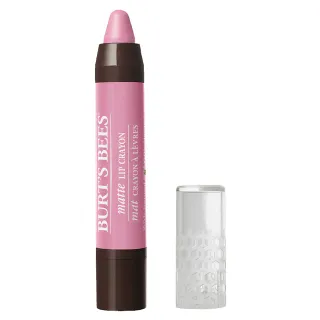
Burt's Bees 100% Natural Moisturizing Matte Lip Crayon Carolina Coast, Carolina Coast

Burt's Bees 100% Natural Moisturizing Matte Lip Crayon Carolina Coast, Carolina Coast

Efficacy75/100IrritancyMedium
Edit

Works for

1 of 1 advertised claim delivered

Moisturizing
15 ingredients credited for this claim
Good support
What the product description says
“100% Natural Moisturizing Matte Lip Crayon Carolina Coast, Carolina Coast”
From product name

This product can help soften the skin and reduce its moisture loss with emollients and occlusives: beeswax, butyrospermum parkii butter.

Keep in mind that this product does not contain effective ingredients to attract water to the upper layer of the skin. This is why an additional product with humectants like glycerin or hyaluronic acid can be helpful (apply it before this product for the best results).

Aleurites moluccanus seed oilKey activeEffect: HighHelps soften the upper layer of the skin~0.5–1.2%
BeeswaxKey active· Emollient, OcclusiveEffect: HighForms a protective barrier that holds water and keeps dry skin hydrated. Keeps an emulsion from separating into its oil and liquid components, and increases the thickness of a product. Can be an allergen~2.1–3.2%
Butyrospermum parkii butterKey active· Emollient, OcclusiveEffect: HighA great moisturising ingredient that softens the skin and reduces water loss from its upper layer. It also can be helpful in protecting skin from free radicals~1.3–2%
Caprylic/capric triglycerideKey active· Emollient, OcclusiveEffect: HighA good mix of fatty acids that forms a protective layer on the skin. Improves the shelf life of products. Derived from coconut and glycerin~6.7–10.1%
Cera albaKey active· Emollient, OcclusiveEffect: HighForms a protective barrier that holds water and keeps dry skin hydrated. Keeps an emulsion from separating into its oil and liquid components, and increases the thickness of a product. Can be an allergen~3–4.4%
Copernicia cerifera waxKey active· Emollient, OcclusiveEffect: HighHelps to soften the upper layer of the skin and create a nice product consistency~1.7–2.5%
Glycine soja oilKey active· EmollientEffect: HighA good emollient that helps soften the skin and helps repair its barrier function. It can clog pores if used in high concentrations.~0.2–0.7%
Helianthus annuus seed oilKey active· Emollient, OcclusiveEffect: HighA great emollient due to its high linoleic acid content. One of the most effective plant oils in helping skin hydration and repairing skin barrier function~0.4–1%
Ricinus communis seed oilKey active· Emollient, OcclusiveEffect: HighA plant oil that can help soften the skin. It might be helpful in calming down inflammation, but solid research is lacking. Is often used in lip products to create the needed product consistency~25–37%
Simmondsia chinensis seed oilKey active· Emollient, OcclusiveEffect: HighSoftens the upper layer of skin and helps restore the healthy skin barrier. Has shown to help calm down inflammation in skin. It is a stable oil, meaning that it retains its properties even when exposed to air.~5.4–8.2%
Copernicia cerifera ceraKey active· EmollientEffect: MediumBrazilian palm wax. Helps soften the upper layer of the skin~1.9–2.9%
Olea europaea fruit oilKey active· EmollientEffect: MediumAn emollient that helps soften the skin but is not effective for restoring its barrier function. Might be helpful to calm down inflammation~0.45–1.05%
Hydrogenated vegetable oilKey active· EmollientEffect: MediumAn oil from a mixture of different vegetables. Helps soften the upper layer of the skin~0.85–1.25%
LecithinEffect: Low, below effective doseUsed mostly for creating emulsions - helping oil and water mix together. Helps soften the upper layer of the skin~0.35–0.85%
TocopherolEffect: Low, below effective dosePure form of vitamin E. Can help moisturise and protect the skin from free radicals. Often used to help stabilise other ingredients or the formula itself~0.3–0.75%

Can it cause trouble?

Irritancy
1 strong irritant: Rosmarinus officinalis leaf extract
Medium risk
We flagged 8 ingredients with irritancy potential. Severity depends on your sensitivity threshold; the table lists the worst offenders first.
IngredientFunctionIrritationEst. amount
Rosmarinus officinalis leaf extractCan be helpful in reducing inflammation in skin, including inflamed acne. It can be irritatingHigh~0.3–0.75%est.
Ci 75470Carmine. A colorant. Can be an allergenHigh~0.1–0.4%est.
Ricinus communis seed oilA plant oil that can help soften the skin. It might be helpful in calming down inflammation, but solid research is lacking. Is often used in lip products to create the needed product consistencyMedium~25–37%est.
Caprylic/capric triglycerideA good mix of fatty acids that forms a protective layer on the skin. Improves the shelf life of products. Derived from coconut and glycerinMedium~6.7–10.1%est.
Simmondsia chinensis seed oilSoftens the upper layer of skin and helps restore the healthy skin barrier. Has shown to help calm down inflammation in skin. It is a stable oil, meaning that it retains its properties even when exposed to air.Medium~5.4–8.2%est.
Cera albaForms a protective barrier that holds water and keeps dry skin hydrated. Keeps an emulsion from separating into its oil and liquid components, and increases the thickness of a product. Can be an allergenMedium~3–4.4%est.
Olea europaea fruit oilAn emollient that helps soften the skin but is not effective for restoring its barrier function. Might be helpful to calm down inflammationMedium~0.45–1.05%est.
Glycine soja oilA good emollient that helps soften the skin and helps repair its barrier function. It can clog pores if used in high concentrations.Medium~0.2–0.7%est.
Comedogenic
3 ingredients rated 2 or more on the 0–5 pore-clogging scale
3 flagged
These ingredients have a comedogenic rating of 2 or more on a 0–5 scale; the table shows each one's rating. In leave-on products they can clog pores in acne-prone skin.
IngredientFunctionRatingEst. amount
Butyrospermum parkii butterA great moisturising ingredient that softens the skin and reduces water loss from its upper layer. It also can be helpful in protecting skin from free radicals3/5~1.3–2%est.
Hydrogenated vegetable oilAn oil from a mixture of different vegetables. Helps soften the upper layer of the skin2/5~0.85–1.25%est.
Glycine soja oilA good emollient that helps soften the skin and helps repair its barrier function. It can clog pores if used in high concentrations.2/5~0.2–0.7%est.
Edit

User reviews

Would you recommend?
No community reviews yet.

Be the first — your take helps the next person decide.

Write a review · ~30s

Ingredients

Filter by role to see what each ingredient is doing.

Ricinus communis seed oil~25–37%
Key activeIrritant · medium
Irritation risk
Medium
Works for
MoisturizingAnti-inflammatory

A plant oil that can help soften the skin. It might be helpful in calming down inflammation, but solid research is lacking. Is often used in lip products to create the needed product consistency

More about Ricinus communis seed oil
Caprylic/capric triglyceride~6.7–10.1%
Key activeIrritant · medium
Irritation risk
Medium
Works for
Moisturizing

A good mix of fatty acids that forms a protective layer on the skin. Improves the shelf life of products. Derived from coconut and glycerin

More about Caprylic/capric triglyceride
Simmondsia chinensis seed oil~5.4–8.2%
Key activeIrritant · medium
Irritation risk
Medium
Works for
Moisturizing

Softens the upper layer of skin and helps restore the healthy skin barrier. Has shown to help calm down inflammation in skin. It is a stable oil, meaning that it retains its properties even when exposed to air.

More about Simmondsia chinensis seed oil
Candelilla cera~4.1–6.2%
Formula
Euphorbia cerifera wax~3.4–5.2%
Formula
Cera alba~3–4.4%
Key activeIrritant · medium
Irritation risk
Medium
Works for
MoisturizingCleansing

Forms a protective barrier that holds water and keeps dry skin hydrated. Keeps an emulsion from separating into its oil and liquid components, and increases the thickness of a product. Can be an allergen

More about Cera alba
Beeswax~2.1–3.2%
Key active
Irritation risk
Low
Works for
Moisturizing

Forms a protective barrier that holds water and keeps dry skin hydrated. Keeps an emulsion from separating into its oil and liquid components, and increases the thickness of a product. Can be an allergen

More about Beeswax
Copernicia cerifera cera~1.9–2.9%
Key active
Irritation risk
Low
Works for
Moisturizing

Brazilian palm wax. Helps soften the upper layer of the skin

More about Copernicia cerifera cera
Copernicia cerifera wax~1.7–2.5%
Key active
Irritation risk
Low
Works for
Moisturizing

Helps to soften the upper layer of the skin and create a nice product consistency

More about Copernicia cerifera wax
Butyrospermum parkii butter~1.3–2%
Key activeComedogenic 3/5
Irritation risk
Low
Comedogenicity
3/5
Works for
MoisturizingAnti-agingAnti-oxidation

A great moisturising ingredient that softens the skin and reduces water loss from its upper layer. It also can be helpful in protecting skin from free radicals

More about Butyrospermum parkii butter
Hydrogenated vegetable oil~0.85–1.25%
Key activeComedogenic 2/5
Irritation risk
Low
Comedogenicity
2/5
Works for
Moisturizing

An oil from a mixture of different vegetables. Helps soften the upper layer of the skin

More about Hydrogenated vegetable oil
Aleurites moluccanus seed oil~0.5–1.2%
Key active
Irritation risk
Low
Works for
Moisturizing

Helps soften the upper layer of the skin

More about Aleurites moluccanus seed oil
Olea europaea fruit oil~0.45–1.05%
Key activeIrritant · medium
Irritation risk
Medium
Works for
Moisturizing

An emollient that helps soften the skin but is not effective for restoring its barrier function. Might be helpful to calm down inflammation

More about Olea europaea fruit oil
Helianthus annuus seed oil~0.4–1%
Key active
Irritation risk
Low
Works for
Moisturizing

A great emollient due to its high linoleic acid content. One of the most effective plant oils in helping skin hydration and repairing skin barrier function

More about Helianthus annuus seed oil
Rosmarinus officinalis leaf extract~0.3–0.75%
Irritant · high
Irritation risk
High
Works for
Anti-blemishAntibacterialAnti-oxidation

Can be helpful in reducing inflammation in skin, including inflamed acne. It can be irritating

More about Rosmarinus officinalis leaf extract
Tocopherol~0.3–0.75%
Formula
Irritation risk
Low
Works for
Anti-oxidationAnti-agingAnti-inflammatoryMoisturizing

Pure form of vitamin E. Can help moisturise and protect the skin from free radicals. Often used to help stabilise other ingredients or the formula itself

More about Tocopherol
Lecithin~0.35–0.85%
Formula
Irritation risk
Low
Works for
CleansingMoisturizing

Used mostly for creating emulsions - helping oil and water mix together. Helps soften the upper layer of the skin

More about Lecithin
Silica~0.35–0.85%
Formula
Irritation risk
Low

Used to absorb oil and can temporarily mattify skin

More about Silica
Glycine soja oil~0.2–0.7%
Key activeComedogenic 2/5Irritant · medium
Irritation risk
Medium
Comedogenicity
2/5
Works for
Moisturizing

A good emollient that helps soften the skin and helps repair its barrier function. It can clog pores if used in high concentrations.

More about Glycine soja oil
Mica~0.15–0.6%
Formula
Irritation risk
Low

Creates an illusion of smoother and more radiant skin tone. Adds shimmer to the skin by reflecting light

More about Mica
Ci 75470~0.1–0.4%
Irritant · high
Irritation risk
High

Carmine. A colorant. Can be an allergen

More about Ci 75470
Iron oxides~0.1–0.3%
Formula
Irritation risk
Low
Works for
Sun protection

An umbrella term for the following three colorants: CI 77491, CI 77492, CI 77499. They might be able to offer some protection against visible light, but the degree of the protection is not clear

More about Iron oxides
Ci 77891~0.05–0.25%
Formula
Irritation risk
Low
More about Ci 77891
Titanium dioxide~0.1–0.3%
Formula
Irritation risk
Low
Works for
Sun protection

Works as a UV filter when used in high concentrations. It is photostable and is effective mostly against the UVB light, with some protection in the UVA range. In small concentrations, used for its ability to improve the color of cosmetic products. Is usually well tolerated by the skin

More about Titanium dioxide
Ingredient list view

Ricinus communis seed oil, Caprylic/capric triglyceride, Simmondsia chinensis seed oil, Candelilla cera, Euphorbia cerifera wax, Cera alba, Beeswax, Copernicia cerifera cera, Copernicia cerifera wax, Butyrospermum parkii butter, Hydrogenated vegetable oil, Aleurites moluccanus seed oil, Olea europaea fruit oil, Helianthus annuus seed oil, Rosmarinus officinalis leaf extract, Tocopherol, Lecithin, Silica, Glycine soja oil, Mica, Ci 75470, Iron oxides, Ci 77891, Titanium dioxide

Compare prices

Retailers ranked by price — lowest first.

Amazon US
Price unavailable
Check
Walgreens
Price unavailable
Check

Affiliate links · prices updated regularly · As an Amazon Associate, WIMJ earns from qualifying purchases.

Cheaper alternatives? Browse formulas in the same category.
We compare ingredient profiles across our catalog — pick the closest match for your budget.
Open dupe finder

Sources cited in this review

Every concentration estimate and effectiveness label is anchored to one of these 14 studies and safety reviews.

  1. 1
  2. 2
  3. 3
  4. 4
  5. 5
  6. 6
Burt's Bees 100% Natural Moisturizing Matte Lip Crayon Carolina Coast, Carolina Coast
Burt's Bees100% Natural Moisturizing Matte Lip Crayon Carolina Coast, Carolina Coast

Affiliate links · As an Amazon Associate, WIMJ earns from qualifying purchases.

As an Amazon Associate, WIMJ earns from qualifying purchases.