Works for
1 of 1 advertised claim delivered
MoisturizingHydroxypalmitoyl sphinganine, Paraffinum liquidum + 14 moreStrong evidence
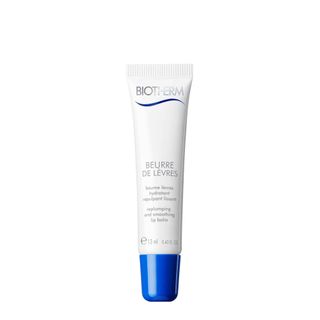
“BEURRE DE LÈVRES Hydrating and smoothing lip balm Beurre de lèvres, is Biotherm's replumping and smoothing lip balm.”
This product can help improve hydration of the skin with the two types of ingredients.
The first type is called “humectants”:
these ingredients help attract water.
When humectants are on the surface of the skin, they “pull in” the moisture from the outside environment, or from
within deeper layers of the skin. The following ingredients in this product do the job:
glycerin, mel.
This product also contains ingredients called “occlusives”. They help reduce the speed with which our skin loses moisture to the outside environment. These ingredients also help soften the upper layer of the skin, so it feels less tight and nicer to the touch. The following ingredients in this product do the job: cera alba, cera microcristallina.
The following ingredients in this product are especially good for supporting the skin barrier and helping with the hydration level: hydroxypalmitoyl sphinganine, paraffinum liquidum
Can it cause trouble?
Irritancy2 strong irritants: Rosa damascena extract, ParfumMedium risk
ComedogenicClean of flagged comedogenic ingredientsNone flagged
User reviews
Be the first — your take helps the next person decide.
Ingredients
Filter by role to see what each ingredient is doing.
Paraffinum liquidum~23–35%
- Irritation risk
- Low
Mineral oil. One of the most effective and well studied occlusive and emollient moisturizing ingredients. Helps reduce moisture loss in skin and repair skin barrier function
More about Paraffinum liquidumGlycerin~3.2–4.8%
- Irritation risk
- Low
One of the best moisturizing ingredients. Naturally present in skin. It attracts water to the upper layer of the skin working as a humectant
More about GlycerinCera microcristallina~4.4–6.7%
- Irritation risk
- Low
Helps to soften the upper layer of the skin, reduce water loss from its surface and create a thicker product consistency
More about Cera microcristallinaParaffin~3.5–5.2%
- Irritation risk
- Low
Prevents water loss from the skin surface and thickens the product consistency
More about ParaffinAluminum starch octenylsuccinate~2.6–3.9%
- Irritation risk
- Medium
Used to thicken the product's consistency
More about Aluminum starch octenylsuccinatePropylene glycol dicaprylate/dicaprate~2–3%
- Irritation risk
- Low
Cetyl alcohol~1.5–2.3%
- Irritation risk
- Low
A non-drying alcohol that works to soften the skin and stabilize product formulations helping oil and water mix together
More about Cetyl alcoholTocopheryl acetate~1.1–1.7%
- Irritation risk
- Medium
A more stable but less bio-available form of vitamin E compared to Tocopherol. Might help moisturize and protect the skin from free radicals, but mostly used in low concentrations to stabilize other ingredients.
More about Tocopheryl acetateBrassica campestris seed oil~1–1.5%
- Irritation risk
- Low
Helps soften the upper layer of the skin
More about Brassica campestris seed oilStearyl alcohol~0.9–1.3%
- Irritation risk
- Low
An emollient that helps soften the skin
More about Stearyl alcoholMel~0.45–1.1%
- Irritation risk
- Low
Helps to soften the upper layer of the skin and attract water to it
More about MelPeg-100 stearate~0.4–0.9%
- Irritation risk
- Low
Helps oil and water mix togehter and creates a nice product texture
More about Peg-100 stearateCera alba~0.45–1.05%
- Irritation risk
- Medium
Forms a protective barrier that holds water and keeps dry skin hydrated. Keeps an emulsion from separating into its oil and liquid components, and increases the thickness of a product. Can be an allergen
More about Cera albaGlyceryl stearate~0.15–0.7%
- Irritation risk
- Low
An emollient that softens the skin and forms a protective layer on its surface. Helps water and oil mix together
More about Glyceryl stearateAluminum stearates~0.15–0.65%
- Irritation risk
- Low
Prunus armeniaca kernel oil~0.15–0.6%
- Irritation risk
- Medium
An emollient that helps soften the skin
More about Prunus armeniaca kernel oilGlyceryl linoleate~0.15–0.65%
- Irritation risk
- Medium
Helps oil and water mix together
More about Glyceryl linoleatePhenoxyethanol~0.1–0.5%
- Irritation risk
- Low
A preservative. It helps prevent bacterial growth in cosmetic products
More about PhenoxyethanolStearalkonium hectorite~0.1–0.45%
Glyceryl oleate~0.15–0.55%
- Irritation risk
- High
Helps oil and water mix together. Can be irritating
More about Glyceryl oleateCi 77891~0.1–0.4%
- Irritation risk
- Low
Macadamia ternifolia seed oil~0.1–0.45%
- Irritation risk
- Medium
Plant oil from nuts that helps soften the upper layer of the skin. Contains a high concentration of oleic acid that can weaken skin's barrier function and increase water-loss while enhancing penetration of other ingredients
More about Macadamia ternifolia seed oilCoriandrum sativum oil~0.05–0.25%
- Irritation risk
- Low
Simmondsia chinensis seed oil~0.1–0.5%
- Irritation risk
- Medium
Softens the upper layer of skin and helps restore the healthy skin barrier. Has shown to help calm down inflammation in skin. It is a stable oil, meaning that it retains its properties even when exposed to air.
More about Simmondsia chinensis seed oilPropylene carbonate~0.1–0.4%
- Irritation risk
- Low
Is used to dissolve other ingredients and create nice product texture
More about Propylene carbonateEthylhexyl methoxycinnamate~0.15–0.65%
- Irritation risk
- High
Octinoxate. When used in higher concentrations, works as a sunscreen protecting the skin from UVB rays. When used in lower concentration, helps to preserve the product formulation. Is shown to be harmful to coral reefs - consider avoiding bathing in coral reef areas when wearing a product with this ingredient. It can be irritating
More about Ethylhexyl methoxycinnamate2-oleamido-1,3-octadecanediol~0.1–0.35%
- Irritation risk
- Low
Helps soften the upper layer of the skin and slow down the water loss over time
More about 2-oleamido-1,3-octadecanediolGlyceryl linolenate~0.1–0.5%
- Irritation risk
- Low
Helps soften the upper layer of the skin
More about Glyceryl linolenateSodium saccharin~0.05–0.3%
- Irritation risk
- Low
Hydroxypalmitoyl sphinganine~0.05–0.3%
- Irritation risk
- Low
A type of lipid similar to ceramides naturally present in skin. Helps to soften the upper layer of the skin and supports the skin barrier function to keep it hydrated. Can help to prevent inflammation in skin
More about Hydroxypalmitoyl sphinganineRosa damascena extract~0.05–0.15%
- Irritation risk
- High
Oil of a very fragrant pink rose used as fragrance in cosmetics. Extensive research has shown it has mixed benefits. In the pro column, inhaling this flower’s scent seems to have relaxing properties and the plant’s petals contain skin-soothing and antioxidant compounds that can benefit skin. On the flipside, the numerous chemicals that create this rose’s distinctive fragrance pose a risk of causing skin aggravation.
More about Rosa damascena extractParfum~0.01–0.1%
- Irritation risk
- High
An aromatic blend of unspecified and possibly irritating ingredients
More about ParfumIngredient list view
Unknown, Paraffinum liquidum, Glycerin, Cera microcristallina, Paraffin, Aluminum starch octenylsuccinate, Propylene glycol dicaprylate/dicaprate, Cetyl alcohol, Tocopheryl acetate, Brassica campestris seed oil, Stearyl alcohol, Mel, Peg-100 stearate, Cera alba, Glyceryl stearate, Aluminum stearates, Prunus armeniaca kernel oil, Glyceryl linoleate, Phenoxyethanol, Unknown, Stearalkonium hectorite, Glyceryl oleate, Ci 77891, Macadamia ternifolia seed oil, Coriandrum sativum oil, Simmondsia chinensis seed oil, Propylene carbonate, Ethylhexyl methoxycinnamate, 2-oleamido-1,3-octadecanediol, Glyceryl linolenate, Sodium saccharin, Hydroxypalmitoyl sphinganine, Rosa damascena extract, Parfum, Unknown
Compare prices
Retailers ranked by price — lowest first.

Product summary
Based on the ingredient list, "BIOTHERM - BEURRE DE LÈVRES" can work well for skin moisturization. To work well, any moisturizer needs to include a combination of water-binding and emollient ingredients. BIOTHERM - BEURRE DE LÈVRES ticks this box. Humectants in this product (glycerin and mel) help to increase the water content in the upper layer of the skin. (These ingredients do so by "capturing" water molecules from the outside air or from within the deeper layers of the skin). Emollients in this formulation (paraffinum liquidum, cera alba, cera microcristallina, cetyl alcohol and glyceryl linolenate) help to reduce the moisture loss from the skin. They also soften the skin surface and relieve the feeling of dryness and tightness.
Irritation risk
There are some common irritants in this product, including ingredients that do not have benefits for the skin. We assess the overall irritancy of this moisturizer to be medium. For a detailed overview of all potential irritants: click here
You can see the detailed formula review with the breakdown of all actives in the product and the full ingredient list with estimated concentrations in the tables below.
Price
The product retails from 12.90$ up to 22.00$ in the United States, for 9.81£ in the United Kingdom and for 25.00CA$ in Canada.
For a detailed price comparison: click here.
Sources cited in this review
Every concentration estimate and effectiveness label is anchored to one of these 8 studies and safety reviews.
- 1A review on the extensive skin benefits of mineral oilncbi.nlm.nih.gov
- 2
- 3
- 4
- 5
- 6Safety Assessment of Ceramides as Used in Cosmeticscir-safety.org

Affiliate links · As an Amazon Associate, WIMJ earns from qualifying purchases.