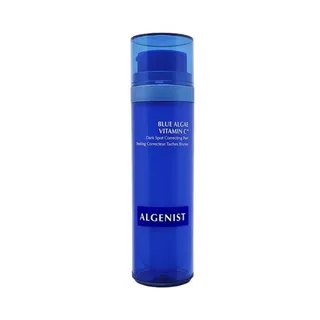
Algenist Blue Algae Vitamin C Correcting Peel

Algenist Blue Algae Vitamin C Correcting Peel

Efficacy95/100IrritancyHigh

Works for

Exfoliation
Glycolic acid, Gluconolactone + 3 more
Works well
What the product description says
“BLUE ALGAE VITAMIN CTM Dark Spot Correcting Peel is a resurfacing & exfoliating peel that visibly reduces the appearance of dark spots and discoloration, formulated with our patented Alguronic Acid from algae, exclusive Vitamin C from Spirulina , a well-known form of blue-green algae rich in essential vitamins and minerals , potent antioxidant Phycocyanin & our Triple-Acid Complex of AHAs/BHA/PHA.”
Source: Algenist

This product can help exfoliate the skin. In other words, it helps break down the bonds between dead cells on the surface of the skin and speed up the skin turnover. Skin often appears softer and brighter after exfoliation, but overdoing it can result in disrupted skin barrier. The following ingredient is doing the exfoliating job in this product: gluconolactone, glycolic acid, mandelic acid.

Glycolic acidKey activeEffect: HighAn alpha-hydroxy acid (AHA) that helps to remove the dead skin cells on the surface of the skin reveling a more even, smoother complexation. It is also able to stimulate collagen production with long-term use. Could help to reduce pore congestion. It can be irritating to the skin. Apply sunscreen daily if using products with glycolic acid~2.6–4%
GluconolactoneKey activeEffect: HighA polyhydroxy acid (PHA) that helps shed the dead cells from the skin surface revealing smoother skin. Is believed to be genter than AHAs. It helps attract water to the upper layer of the skin and can stimulate production of skin's own hyaluronic acid resulting in improved hydration levels. It has been shown to be helpful against acne and clogged pores if used consistently (e.g over a period of 12 weeks) in high enough concentration. It can help reduce fine lines and wrinkles and improve skin tone with long-term application. Can help neutralize free radicals~2–3%
Mandelic acidKey activeEffect: HighHelps shed the upper layer of dead cells from the surface of the skin revealing smoother, brighter skin. It can help to reduce hyperpigmentation. It has anti-bacterial properties, and might help to reduce blemishes, as well as fine lines and wrinkles. It is considered to be gentler than glycolic acid~0.85–1.25%
Azelaic acidKey activeEffect: MediumIs produced by a yeast that lives on normal human skin. It is used in medicine as a topical treatment for mild to moderate acne. It has a mild exfoliating effect. It can also help reduce hyperpigmentation, helps calm down inflammation and can help neutralize free radicals~0.2–0.75%
Salicylic acidUnder-dosedUsed for skin exfoliation. It has an anti-inflammatory and anti-bacterial effect, helps to unclog pores, prevent blemishes and speed up healing of the existing ones. Sometimes referred to as a BHA (beta-hydroxy acid)~0.15–0.6%
Evens skin tone
Glycolic acid, Gluconolactone + 6 more
Works well
What the product description says
“Skin is refined and resurfaced with a reduction in the look of discoloration as well as blemishes & imperfections, revealing radiance, smoothed texture, more even skin tone and a brighter overall complexion. 10m L/ 0.34 US fl. oz.”
Source: Algenist

This product can help reduce hypepigmentation and even out the skin tone because it contains the following effective ingredients: azelaic acid, gluconolactone, glycolic acid, mandelic acid, tranexamic acid

Keep in mind that you would need to apply any topical skincare targetted at hypigmentation consistently for a couple of months to get a result. No topical skincare product can help get rid of hyperpigmentation (including post-acne marks and age spots) instantly.

Glycolic acidKey activeEffect: HighAn alpha-hydroxy acid (AHA) that helps to remove the dead skin cells on the surface of the skin reveling a more even, smoother complexation. It is also able to stimulate collagen production with long-term use. Could help to reduce pore congestion. It can be irritating to the skin. Apply sunscreen daily if using products with glycolic acid~2.6–4%
GluconolactoneKey activeEffect: HighA polyhydroxy acid (PHA) that helps shed the dead cells from the skin surface revealing smoother skin. Is believed to be genter than AHAs. It helps attract water to the upper layer of the skin and can stimulate production of skin's own hyaluronic acid resulting in improved hydration levels. It has been shown to be helpful against acne and clogged pores if used consistently (e.g over a period of 12 weeks) in high enough concentration. It can help reduce fine lines and wrinkles and improve skin tone with long-term application. Can help neutralize free radicals~2–3%
Mandelic acidKey activeEffect: HighHelps shed the upper layer of dead cells from the surface of the skin revealing smoother, brighter skin. It can help to reduce hyperpigmentation. It has anti-bacterial properties, and might help to reduce blemishes, as well as fine lines and wrinkles. It is considered to be gentler than glycolic acid~0.85–1.25%
Azelaic acidKey activeEffect: HighIs produced by a yeast that lives on normal human skin. It is used in medicine as a topical treatment for mild to moderate acne. It has a mild exfoliating effect. It can also help reduce hyperpigmentation, helps calm down inflammation and can help neutralize free radicals~0.2–0.75%
Tranexamic acidKey activeEffect: HighAn amino acid that is effective in reducing hyperpigmentation and evening out the skin tone. It can also help in skin barrier recovery. It is used to treat melasma, especially with injections and when taken orally~0.15–0.7%
Dipotassium glycyrrhizateEffect: Low, below effective doseA salt derived from licorice. Works as an emollient to soften the upper layer of the skin and can help calm down inflammation. Might be helpful for skin lightening~0.15–0.6%
Salicylic acidEffect: Low, below effective doseUsed for skin exfoliation. It has an anti-inflammatory and anti-bacterial effect, helps to unclog pores, prevent blemishes and speed up healing of the existing ones. Sometimes referred to as a BHA (beta-hydroxy acid)~0.15–0.6%
Ascorbic acidUnder-dosedThe most well-researched antioxidant that works in skin. Helps neutralize free radicals supporting collagen production, helping to even out the skin tone and preventing early signs of aging~1.1–1.6%
Anti-blemish
Azelaic acid, Glycolic acid + 4 more
Works well
What the product description says
“The signs of discolouration, as well as blemishes & imperfections, are reduced and skin appears radiant and smooth.”
Source: Cultbeauty

This product can help reduce breakouts and clogged pores because it contains the following ingredient: azelaic acid. This ingredient is used for treating acne and can have a noticeable effect.

The following ingredient (ingredients) in this product might be helpful, but there is no evidence to confirm that it actually works: gluconolactone, glycolic acid, mandelic acid

Azelaic acidHeroEffect: HighIs produced by a yeast that lives on normal human skin. It is used in medicine as a topical treatment for mild to moderate acne. It has a mild exfoliating effect. It can also help reduce hyperpigmentation, helps calm down inflammation and can help neutralize free radicals~0.2–0.75%
Glycolic acidKey activeEffect: MediumAn alpha-hydroxy acid (AHA) that helps to remove the dead skin cells on the surface of the skin reveling a more even, smoother complexation. It is also able to stimulate collagen production with long-term use. Could help to reduce pore congestion. It can be irritating to the skin. Apply sunscreen daily if using products with glycolic acid~2.6–4%
GluconolactoneKey activeEffect: MediumA polyhydroxy acid (PHA) that helps shed the dead cells from the skin surface revealing smoother skin. Is believed to be genter than AHAs. It helps attract water to the upper layer of the skin and can stimulate production of skin's own hyaluronic acid resulting in improved hydration levels. It has been shown to be helpful against acne and clogged pores if used consistently (e.g over a period of 12 weeks) in high enough concentration. It can help reduce fine lines and wrinkles and improve skin tone with long-term application. Can help neutralize free radicals~2–3%
Mandelic acidKey activeEffect: MediumHelps shed the upper layer of dead cells from the surface of the skin revealing smoother, brighter skin. It can help to reduce hyperpigmentation. It has anti-bacterial properties, and might help to reduce blemishes, as well as fine lines and wrinkles. It is considered to be gentler than glycolic acid~0.85–1.25%
Melia azadirachta leaf extractEffect: LowA plant extract that has anti-bacterial properties. Can be used to preserve the product. Can be irritating~0.15–0.65%
Salicylic acidUnder-dosedUsed for skin exfoliation. It has an anti-inflammatory and anti-bacterial effect, helps to unclog pores, prevent blemishes and speed up healing of the existing ones. Sometimes referred to as a BHA (beta-hydroxy acid)~0.15–0.6%
Anti-aging
Glycolic acid, Gluconolactone + 3 more
Works well
What the product description says
“Patented Alguronic Acid utilises naturally sourced algae to reduce fine lines and wrinkles, boosting the effectiveness of other skincare ingredients.”
Source: Allbeauty

This product can help reduce and prevent fine lines and wrinkles, improve skin elasticity and firmness because it contains gluconolactone, glycolic acid.

Keep in mind that it typically takes at least 6 weeks to notice any results because the changes that are needed to improve fine lines and elasticity happen in the deeper layers of the skin. No topical anti-aging product can “erase” wrinkles or fully reverse signs of aging.

Glycolic acidKey activeEffect: HighAn alpha-hydroxy acid (AHA) that helps to remove the dead skin cells on the surface of the skin reveling a more even, smoother complexation. It is also able to stimulate collagen production with long-term use. Could help to reduce pore congestion. It can be irritating to the skin. Apply sunscreen daily if using products with glycolic acid~2.6–4%
GluconolactoneKey activeEffect: HighA polyhydroxy acid (PHA) that helps shed the dead cells from the skin surface revealing smoother skin. Is believed to be genter than AHAs. It helps attract water to the upper layer of the skin and can stimulate production of skin's own hyaluronic acid resulting in improved hydration levels. It has been shown to be helpful against acne and clogged pores if used consistently (e.g over a period of 12 weeks) in high enough concentration. It can help reduce fine lines and wrinkles and improve skin tone with long-term application. Can help neutralize free radicals~2–3%
Limnanthes alba seed oilEffect: LowThis oil's cmposition is closest to rapeseed oil. It is a very stable oil and serves as an emoillient~3.7–5.6%
TocopherolEffect: Low, below effective dosePure form of vitamin E. Can help moisturise and protect the skin from free radicals. Often used to help stabilise other ingredients or the formula itself~0.15–0.55%
Ascorbic acidUnder-dosedThe most well-researched antioxidant that works in skin. Helps neutralize free radicals supporting collagen production, helping to even out the skin tone and preventing early signs of aging~1.1–1.6%
Moisturizing
Glycerin, Helianthus annuus seed oil + 14 more
Works
What the product description says
“BEIJA FLOR ELASTI-CREAM Sol de Janeiro bring you a nourishing, moisture-rich cream designed to boost the skin’s elasticity.”
Source: SpaceNK

This product can help improve hydration of the skin with the two types of ingredients.

The first type is called “humectants”:
these ingredients help attract water. When humectants are on the surface of the skin, they “pull in” the moisture from the outside environment, or from within deeper layers of the skin. The following ingredients in this product do the job: glycerin, parachlorella beijerinckii exopolysaccharides.

This product also contains ingredients called “occlusives”. They help reduce the speed with which our skin loses moisture to the outside environment. These ingredients also help soften the upper layer of the skin, so it feels less tight and nicer to the touch. The following ingredients in this product do the job: helianthus annuus seed oil, carthamus tinctorius seed oil.

GlycerinKey active· HumectantEffect: HighOne of the best moisturizing ingredients. Naturally present in skin. It attracts water to the upper layer of the skin working as a humectant~22–33%
Helianthus annuus seed oilKey active· Emollient, OcclusiveEffect: HighA great emollient due to its high linoleic acid content. One of the most effective plant oils in helping skin hydration and repairing skin barrier function~4.7–7%
Carthamus tinctorius seed oilKey active· EmollientEffect: HighAn emollient that helps soften the skin and might help calm down inflammation~4.5–6.7%
Limnanthes alba seed oilKey active· EmollientEffect: HighThis oil's cmposition is closest to rapeseed oil. It is a very stable oil and serves as an emoillient~3.7–5.6%
GluconolactoneKey activeEffect: HighA polyhydroxy acid (PHA) that helps shed the dead cells from the skin surface revealing smoother skin. Is believed to be genter than AHAs. It helps attract water to the upper layer of the skin and can stimulate production of skin's own hyaluronic acid resulting in improved hydration levels. It has been shown to be helpful against acne and clogged pores if used consistently (e.g over a period of 12 weeks) in high enough concentration. It can help reduce fine lines and wrinkles and improve skin tone with long-term application. Can help neutralize free radicals~2–3%
Parachlorella beijerinckii exopolysaccharidesKey active· HumectantEffect: HighCompounds extracted from green algae that could help neutralize free radicals, but evidence of effectiveness in skincare products (topical applicaiton) is missing. Helps moisturize the skin by attracting water to its upper layer~0.4–0.9%
Spirulina platensis extractKey activeEffect: MediumAn algae extract. Might help to attract water to the upper layer of the skin and have an anti-oxidant effect~0.3–0.75%
Tranexamic acidKey activeEffect: HighAn amino acid that is effective in reducing hyperpigmentation and evening out the skin tone. It can also help in skin barrier recovery. It is used to treat melasma, especially with injections and when taken orally~0.15–0.7%
Corallina officinalis extractKey activeEffect: HighRed algae extract that helps attract water to the upper layer of the skin and might contain antioxidants~0.15–0.65%
Sodium hyaluronateKey active· HumectantEffect: HighOne of the best moisturizing ingredients. Attracts water into the upper layer of the skin~0.15–0.55%
Glyceryl stearate seKey activeEffect: MediumUsed to stabilize the product formulations and works as an emollient~0.15–0.65%
Tanacetum annuum flower oilEffect: LowAn essential oil that has anti-inflammatory properties but also contains irritating compounds~0.15–0.55%
Behenyl alcohol· Emollient, OcclusiveEffect: LowNon-drying alcohol that helps water and oil mix together. Also serves as an emollient~0.15–0.7%
TocopherolEffect: Low, below effective dosePure form of vitamin E. Can help moisturise and protect the skin from free radicals. Often used to help stabilise other ingredients or the formula itself~0.15–0.55%
Simmondsia chinensis seed oilUnder-dosedSoftens the upper layer of skin and helps restore the healthy skin barrier. Has shown to help calm down inflammation in skin. It is a stable oil, meaning that it retains its properties even when exposed to air.~0.2–0.75%
Dipotassium glycyrrhizateUnder-dosedA salt derived from licorice. Works as an emollient to soften the upper layer of the skin and can help calm down inflammation. Might be helpful for skin lightening~0.15–0.6%
Anti-oxidation
Side benefit · Gluconolactone, Azelaic acid + 14 more
Works well

This product contains antioxidants (azelaic acid) that can help neutralize free radicals in skin. By doing so, they can lessen the damage the skin gets from the UV light (sun).

The following ingredients - gluconolactone also can have an antioxidant effect, but there is less evidence to confirm their effectiveness in skin.

GluconolactoneKey activeEffect: MediumA polyhydroxy acid (PHA) that helps shed the dead cells from the skin surface revealing smoother skin. Is believed to be genter than AHAs. It helps attract water to the upper layer of the skin and can stimulate production of skin's own hyaluronic acid resulting in improved hydration levels. It has been shown to be helpful against acne and clogged pores if used consistently (e.g over a period of 12 weeks) in high enough concentration. It can help reduce fine lines and wrinkles and improve skin tone with long-term application. Can help neutralize free radicals~2–3%
Azelaic acidKey activeEffect: HighIs produced by a yeast that lives on normal human skin. It is used in medicine as a topical treatment for mild to moderate acne. It has a mild exfoliating effect. It can also help reduce hyperpigmentation, helps calm down inflammation and can help neutralize free radicals~0.2–0.75%
Carthamus tinctorius seed oilEffect: LowAn emollient that helps soften the skin and might help calm down inflammation~4.5–6.7%
Limnanthes alba seed oilEffect: LowThis oil's cmposition is closest to rapeseed oil. It is a very stable oil and serves as an emoillient~3.7–5.6%
Parachlorella beijerinckii exopolysaccharidesEffect: LowCompounds extracted from green algae that could help neutralize free radicals, but evidence of effectiveness in skincare products (topical applicaiton) is missing. Helps moisturize the skin by attracting water to its upper layer~0.4–0.9%
Spirulina platensis extractEffect: LowAn algae extract. Might help to attract water to the upper layer of the skin and have an anti-oxidant effect~0.3–0.75%
Aloe barbadensis flower extractEffect: LowA plant extract that might have some anti-oxidant effect~0.2–0.7%
Ocimum sanctum leaf extractEffect: LowA plant extract that is rich in a fragrance compound eugenol that is a frequent allergen and can be irritating. It might also contain anti-oxidants to help neutralize free radicals~0.15–0.55%
Melia azadirachta flower extractEffect: LowA plant extract that might be helpful to neutralize free radicals in skin~0.15–0.65%
Corallina officinalis extractEffect: LowRed algae extract that helps attract water to the upper layer of the skin and might contain antioxidants~0.15–0.65%
Solanum melongena fruit extractEffect: LowEggplant fruit extract. Might have some anti-oxidant effect~0.15–0.55%
Coccinia indica fruit extractEffect: LowA plant extract that might have some anti-oxidant effect helping neutralize free radicals in skin~0.15–0.55%
BisabololEffect: Low, below effective doseAn active component of chamomile plant that historically has been used to calm down irritated skin. A recent study shows that bisabolol indeed can have some anti-inflammatory effect on skin, even though conclusive data is lacking. Bisabolol has a sweet floral scent and can be added to products for its aromatic properties~0.35–0.8%
Tocopheryl acetateEffect: Low, below effective doseA more stable but less bio-available form of vitamin E compared to Tocopherol. Might help moisturize and protect the skin from free radicals, but mostly used in low concentrations to stabilize other ingredients.~0.15–0.6%
Ascorbic acidUnder-dosedThe most well-researched antioxidant that works in skin. Helps neutralize free radicals supporting collagen production, helping to even out the skin tone and preventing early signs of aging~1.1–1.6%
TocopherolUnder-dosedPure form of vitamin E. Can help moisturise and protect the skin from free radicals. Often used to help stabilise other ingredients or the formula itself~0.15–0.55%

Can it cause trouble?

Irritancy
5 strong irritants: Menthoxypropanediol, Tanacetum annuum flower oil + 3 more — patch-test recommended
High risk
We flagged 22 ingredients with irritancy potential. Severity depends on your sensitivity threshold; the table lists the worst offenders first.
IngredientFunctionIrritationEst. amount
Glycolic acidAn alpha-hydroxy acid (AHA) that helps to remove the dead skin cells on the surface of the skin reveling a more even, smoother complexation. It is also able to stimulate collagen production with long-term use. Could help to reduce pore congestion. It can be irritating to the skin. Apply sunscreen daily if using products with glycolic acidHigh~2.6–4%est.
Ascorbic acidThe most well-researched antioxidant that works in skin. Helps neutralize free radicals supporting collagen production, helping to even out the skin tone and preventing early signs of agingHigh~1.1–1.6%est.
Mandelic acidHelps shed the upper layer of dead cells from the surface of the skin revealing smoother, brighter skin. It can help to reduce hyperpigmentation. It has anti-bacterial properties, and might help to reduce blemishes, as well as fine lines and wrinkles. It is considered to be gentler than glycolic acidHigh~0.85–1.25%est.
MenthoxypropanediolUsed as a fragrance. Can be irritatingHigh~0.35–0.8%est.
Salicylic acidUsed for skin exfoliation. It has an anti-inflammatory and anti-bacterial effect, helps to unclog pores, prevent blemishes and speed up healing of the existing ones. Sometimes referred to as a BHA (beta-hydroxy acid)High~0.15–0.6%est.
Tanacetum annuum flower oilAn essential oil that has anti-inflammatory properties but also contains irritating compoundsHigh~0.15–0.55%est.
Lavandula angustifolia oilAn essential oil. Potential allergen and can be irritating. It has some anti-bacterial propertiesHigh~0.15–0.55%est.
Aloe barbadensis flower extractA plant extract that might have some anti-oxidant effectHigh~0.2–0.7%est.
Curcuma longa root extractA plant extract that can contain an active compound curcumin, that may have some anti-inflammatory properties when applied to the skin, but solid research is lacking and the typical concentration used in skincare products is too low. Can be an irritantHigh~0.15–0.5%est.
Ocimum basilicum flower/leaf extractUsed as a fragrance. Canbe irritatingHigh~0.15–0.55%est.
Ocimum sanctum leaf extractA plant extract that is rich in a fragrance compound eugenol that is a frequent allergen and can be irritating. It might also contain anti-oxidants to help neutralize free radicalsHigh~0.15–0.55%est.
Melia azadirachta leaf extractA plant extract that has anti-bacterial properties. Can be used to preserve the product. Can be irritatingHigh~0.15–0.65%est.
GluconolactoneA polyhydroxy acid (PHA) that helps shed the dead cells from the skin surface revealing smoother skin. Is believed to be genter than AHAs. It helps attract water to the upper layer of the skin and can stimulate production of skin's own hyaluronic acid resulting in improved hydration levels. It has been shown to be helpful against acne and clogged pores if used consistently (e.g over a period of 12 weeks) in high enough concentration. It can help reduce fine lines and wrinkles and improve skin tone with long-term application. Can help neutralize free radicalsMedium~2–3%est.
Oleth-5Helps water and oil mix togetherMedium~0.45–1%est.
Citric acidCan work as an exfoliant but is typically used to adjust the product pHMedium~0.3–0.7%est.
Tocopheryl acetateA more stable but less bio-available form of vitamin E compared to Tocopherol. Might help moisturize and protect the skin from free radicals, but mostly used in low concentrations to stabilize other ingredients.Medium~0.15–0.6%est.
Coccinia indica fruit extractA plant extract that might have some anti-oxidant effect helping neutralize free radicals in skinMedium~0.15–0.55%est.
Solanum melongena fruit extractEggplant fruit extract. Might have some anti-oxidant effectMedium~0.15–0.55%est.
Simmondsia chinensis seed oilSoftens the upper layer of skin and helps restore the healthy skin barrier. Has shown to help calm down inflammation in skin. It is a stable oil, meaning that it retains its properties even when exposed to air.Medium~0.2–0.75%est.
Melia azadirachta flower extractA plant extract that might be helpful to neutralize free radicals in skinMedium~0.15–0.65%est.
Sodium citrateHelps to control the skin's pH level. Maintains the skin's natural film of amino-lactic acids and oils. Helps to preserve productsMedium~0.15–0.55%est.
EthylhexylglycerinA preservativeMedium~0.1–0.45%est.
Comedogenic
3 ingredients rated 2 or more on the 0–5 pore-clogging scale
3 flagged
These ingredients have a comedogenic rating of 2 or more on a 0–5 scale; the table shows each one's rating. In leave-on products they can clog pores in acne-prone skin.
IngredientFunctionRatingEst. amount
Spirulina platensis extractAn algae extract. Might help to attract water to the upper layer of the skin and have an anti-oxidant effect3/5~0.3–0.75%est.
Corallina officinalis extractRed algae extract that helps attract water to the upper layer of the skin and might contain antioxidants3/5~0.15–0.65%est.
Glyceryl stearate seUsed to stabilize the product formulations and works as an emollient2/5~0.15–0.65%est.

User reviews

Would you recommend?
No community reviews yet.

Be the first — your take helps the next person decide.

Ingredients

Filter by role to see what each ingredient is doing.

Glycerin~22–33%
Key active
Irritation risk
Low
Works for
Moisturizing

One of the best moisturizing ingredients. Naturally present in skin. It attracts water to the upper layer of the skin working as a humectant

More about Glycerin
Carthamus tinctorius seed oil~4.5–6.7%
Key active
Irritation risk
Low
Works for
MoisturizingAnti-oxidation

An emollient that helps soften the skin and might help calm down inflammation

More about Carthamus tinctorius seed oil
Helianthus annuus seed oil~4.7–7%
Key active
Irritation risk
Low
Works for
Moisturizing

A great emollient due to its high linoleic acid content. One of the most effective plant oils in helping skin hydration and repairing skin barrier function

More about Helianthus annuus seed oil
Limnanthes alba seed oil~3.7–5.6%
Key active
Irritation risk
Low
Works for
MoisturizingAnti-agingAnti-oxidation

This oil's cmposition is closest to rapeseed oil. It is a very stable oil and serves as an emoillient

More about Limnanthes alba seed oil
Glycolic acid~2.6–4%
Key activeIrritant · high
Irritation risk
High
Works for
ExfoliationEvens skin toneAnti-agingAnti-blemish

An alpha-hydroxy acid (AHA) that helps to remove the dead skin cells on the surface of the skin reveling a more even, smoother complexation. It is also able to stimulate collagen production with long-term use. Could help to reduce pore congestion. It can be irritating to the skin. Apply sunscreen daily if using products with glycolic acid

More about Glycolic acid
Gluconolactone~2–3%
Key activeIrritant · medium
Irritation risk
Medium
Works for
MoisturizingAnti-agingEvens skin toneExfoliationAnti-blemishAnti-oxidation

A polyhydroxy acid (PHA) that helps shed the dead cells from the skin surface revealing smoother skin. Is believed to be genter than AHAs. It helps attract water to the upper layer of the skin and can stimulate production of skin's own hyaluronic acid resulting in improved hydration levels. It has been shown to be helpful against acne and clogged pores if used consistently (e.g over a period of 12 weeks) in high enough concentration. It can help reduce fine lines and wrinkles and improve skin tone with long-term application. Can help neutralize free radicals

More about Gluconolactone
Polyglyceryl-10 behenate/eicosadioate~1.6–2.4%
Formula
Irritation risk
Low
Works for
Cleansing
More about Polyglyceryl-10 behenate/eicosadioate
Aminomethyl propanol~1.3–1.9%
Formula
Irritation risk
Low

Used to adjust the pH in formulations

More about Aminomethyl propanol
Ascorbic acid~1.1–1.6%
Under-dosedIrritant · high
Irritation risk
High
Works for
Evens skin toneAnti-agingAnti-oxidation

The most well-researched antioxidant that works in skin. Helps neutralize free radicals supporting collagen production, helping to even out the skin tone and preventing early signs of aging

More about Ascorbic acid
Mandelic acid~0.85–1.25%
Key activeIrritant · high
Irritation risk
High
Works for
Evens skin toneExfoliationAnti-blemishAntibacterial

Helps shed the upper layer of dead cells from the surface of the skin revealing smoother, brighter skin. It can help to reduce hyperpigmentation. It has anti-bacterial properties, and might help to reduce blemishes, as well as fine lines and wrinkles. It is considered to be gentler than glycolic acid

More about Mandelic acid
Glyceryl behenate/eicosadioate~0.55–1.3%
Formula
Irritation risk
Low
Works for
Cleansing
More about Glyceryl behenate/eicosadioate
Oleth-5~0.45–1%
Irritant · medium
Irritation risk
Medium
Works for
Cleansing

Helps water and oil mix together

More about Oleth-5
Bisabolol~0.35–0.8%
Formula
Irritation risk
Low
Works for
Reduces irritationAnti-inflammatoryAnti-oxidation

An active component of chamomile plant that historically has been used to calm down irritated skin. A recent study shows that bisabolol indeed can have some anti-inflammatory effect on skin, even though conclusive data is lacking. Bisabolol has a sweet floral scent and can be added to products for its aromatic properties

More about Bisabolol
Menthoxypropanediol~0.35–0.8%
Irritant · high
Irritation risk
High

Used as a fragrance. Can be irritating

More about Menthoxypropanediol
Spirulina platensis extract~0.3–0.75%
Key activeComedogenic 3/5
Irritation risk
Low
Comedogenicity
3/5
Works for
MoisturizingAnti-oxidation

An algae extract. Might help to attract water to the upper layer of the skin and have an anti-oxidant effect

More about Spirulina platensis extract
Parachlorella beijerinckii exopolysaccharides~0.4–0.9%
Key active
Irritation risk
Low
Works for
MoisturizingAnti-oxidation

Compounds extracted from green algae that could help neutralize free radicals, but evidence of effectiveness in skincare products (topical applicaiton) is missing. Helps moisturize the skin by attracting water to its upper layer

More about Parachlorella beijerinckii exopolysaccharides
Citric acid~0.3–0.7%
Irritant · medium
Irritation risk
Medium

Can work as an exfoliant but is typically used to adjust the product pH

More about Citric acid
Azelaic acid~0.2–0.75%
Hero · Anti-blemish
Irritation risk
Low
Works for
Anti-oxidationAnti-blemishEvens skin toneExfoliation

Is produced by a yeast that lives on normal human skin. It is used in medicine as a topical treatment for mild to moderate acne. It has a mild exfoliating effect. It can also help reduce hyperpigmentation, helps calm down inflammation and can help neutralize free radicals

More about Azelaic acid
Tranexamic acid~0.15–0.7%
Key active
Irritation risk
Low
Works for
MoisturizingEvens skin tone

An amino acid that is effective in reducing hyperpigmentation and evening out the skin tone. It can also help in skin barrier recovery. It is used to treat melasma, especially with injections and when taken orally

More about Tranexamic acid
Malic acid~0.15–0.65%
Formula
Irritation risk
Low

Helps adjust the product pH

More about Malic acid
Salicylic acid~0.15–0.6%
Under-dosedIrritant · high
Irritation risk
High
Works for
Anti-inflammatoryAnti-blemishExfoliationAntibacterialEvens skin tone

Used for skin exfoliation. It has an anti-inflammatory and anti-bacterial effect, helps to unclog pores, prevent blemishes and speed up healing of the existing ones. Sometimes referred to as a BHA (beta-hydroxy acid)

More about Salicylic acid
Dipotassium glycyrrhizate~0.15–0.6%
Under-dosed
Irritation risk
Low
Works for
MoisturizingAnti-inflammatoryEvens skin tone

A salt derived from licorice. Works as an emollient to soften the upper layer of the skin and can help calm down inflammation. Might be helpful for skin lightening

More about Dipotassium glycyrrhizate
Tocopheryl acetate~0.15–0.6%
Irritant · medium
Irritation risk
Medium
Works for
Anti-oxidation

A more stable but less bio-available form of vitamin E compared to Tocopherol. Might help moisturize and protect the skin from free radicals, but mostly used in low concentrations to stabilize other ingredients.

More about Tocopheryl acetate
Tanacetum annuum flower oil~0.15–0.55%
Irritant · high
Irritation risk
High
Works for
Anti-inflammatoryMoisturizing

An essential oil that has anti-inflammatory properties but also contains irritating compounds

More about Tanacetum annuum flower oil
Lavandula angustifolia oil~0.15–0.55%
Irritant · high
Irritation risk
High

An essential oil. Potential allergen and can be irritating. It has some anti-bacterial properties

More about Lavandula angustifolia oil
Sodium hyaluronate~0.15–0.55%
Key active
Irritation risk
Low
Works for
Moisturizing

One of the best moisturizing ingredients. Attracts water into the upper layer of the skin

More about Sodium hyaluronate
Coccinia indica fruit extract~0.15–0.55%
Irritant · medium
Irritation risk
Medium
Works for
Anti-oxidation

A plant extract that might have some anti-oxidant effect helping neutralize free radicals in skin

More about Coccinia indica fruit extract
Solanum melongena fruit extract~0.15–0.55%
Irritant · medium
Irritation risk
Medium
Works for
Anti-oxidation

Eggplant fruit extract. Might have some anti-oxidant effect

More about Solanum melongena fruit extract
Aloe barbadensis flower extract~0.2–0.7%
Irritant · high
Irritation risk
High
Works for
Anti-oxidation

A plant extract that might have some anti-oxidant effect

More about Aloe barbadensis flower extract
Curcuma longa root extract~0.15–0.5%
Irritant · high
Irritation risk
High
Works for
Anti-inflammatory

A plant extract that can contain an active compound curcumin, that may have some anti-inflammatory properties when applied to the skin, but solid research is lacking and the typical concentration used in skincare products is too low. Can be an irritant

More about Curcuma longa root extract
Ocimum basilicum flower/leaf extract~0.15–0.55%
Irritant · high
Irritation risk
High

Used as a fragrance. Canbe irritating

More about Ocimum basilicum flower/leaf extract
Ocimum sanctum leaf extract~0.15–0.55%
Irritant · high
Irritation risk
High
Works for
Anti-oxidation

A plant extract that is rich in a fragrance compound eugenol that is a frequent allergen and can be irritating. It might also contain anti-oxidants to help neutralize free radicals

More about Ocimum sanctum leaf extract
Simmondsia chinensis seed oil~0.2–0.75%
Under-dosedIrritant · medium
Irritation risk
Medium
Works for
Moisturizing

Softens the upper layer of skin and helps restore the healthy skin barrier. Has shown to help calm down inflammation in skin. It is a stable oil, meaning that it retains its properties even when exposed to air.

More about Simmondsia chinensis seed oil
Tocopherol~0.15–0.55%
Under-dosed
Irritation risk
Low
Works for
Anti-oxidationMoisturizingAnti-agingAnti-inflammatory

Pure form of vitamin E. Can help moisturise and protect the skin from free radicals. Often used to help stabilise other ingredients or the formula itself

More about Tocopherol
Melia azadirachta leaf extract~0.15–0.65%
Irritant · high
Irritation risk
High
Works for
AntibacterialAnti-blemish

A plant extract that has anti-bacterial properties. Can be used to preserve the product. Can be irritating

More about Melia azadirachta leaf extract
Melia azadirachta flower extract~0.15–0.65%
Irritant · medium
Irritation risk
Medium
Works for
Anti-oxidation

A plant extract that might be helpful to neutralize free radicals in skin

More about Melia azadirachta flower extract
Corallina officinalis extract~0.15–0.65%
Key activeComedogenic 3/5
Irritation risk
Low
Comedogenicity
3/5
Works for
MoisturizingAnti-oxidation

Red algae extract that helps attract water to the upper layer of the skin and might contain antioxidants

More about Corallina officinalis extract
Glyceryl stearate se~0.15–0.65%
Key activeComedogenic 2/5
Irritation risk
Low
Comedogenicity
2/5
Works for
CleansingMoisturizing

Used to stabilize the product formulations and works as an emollient

More about Glyceryl stearate se
Sodium citrate~0.15–0.55%
Irritant · medium
Irritation risk
Medium

Helps to control the skin's pH level. Maintains the skin's natural film of amino-lactic acids and oils. Helps to preserve products

More about Sodium citrate
Euphorbia cerifera wax~0.2–0.75%
Formula
Candelilla cera~0.35–0.75%
Formula
Behenyl alcohol~0.15–0.7%
Formula
Irritation risk
Low
Works for
Moisturizing

Non-drying alcohol that helps water and oil mix together. Also serves as an emollient

More about Behenyl alcohol
Polyglyceryl-3 stearate~0.15–0.5%
Formula
Irritation risk
Low
Works for
Cleansing

Helps oil and water mix together

More about Polyglyceryl-3 stearate
Ethylhexylglycerin~0.1–0.45%
Irritant · medium
Irritation risk
Medium

A preservative

More about Ethylhexylglycerin
Water~0.1–0.35%
Formula
Irritation risk
Low

Plain old water

More about Water
Phenoxyethanol~0.1–0.45%
Formula
Irritation risk
Low

A preservative. It helps prevent bacterial growth in cosmetic products

More about Phenoxyethanol
Ingredient list view

Glycerin, Carthamus tinctorius seed oil, Helianthus annuus seed oil, Limnanthes alba seed oil, Glycolic acid, Gluconolactone, Polyglyceryl-10 behenate/eicosadioate, Aminomethyl propanol, Ascorbic acid, Mandelic acid, Glyceryl behenate/eicosadioate, Oleth-5, Bisabolol, Menthoxypropanediol, Spirulina platensis extract, Parachlorella beijerinckii exopolysaccharides, Citric acid, Azelaic acid, Tranexamic acid, Malic acid, Salicylic acid, Dipotassium glycyrrhizate, Tocopheryl acetate, Tanacetum annuum flower oil, Lavandula angustifolia oil, Sodium hyaluronate, Coccinia indica fruit extract, Solanum melongena fruit extract, Aloe barbadensis flower extract, Curcuma longa root extract, Ocimum basilicum flower/leaf extract, Ocimum sanctum leaf extract, Simmondsia chinensis seed oil, Tocopherol, Melia azadirachta leaf extract, Melia azadirachta flower extract, Corallina officinalis extract, Glyceryl stearate se, Sodium citrate, Euphorbia cerifera wax, Candelilla cera, Behenyl alcohol, Polyglyceryl-3 stearate, Ethylhexylglycerin, Water, Phenoxyethanol

Compare prices

Retailers ranked by price — lowest first.

Amazon USPrice as of 11/10 03:25 GMT
$45.97
Buy
SpaceNK US
$85.00
Buy

Affiliate links · As an Amazon Associate, WIMJ earns from qualifying purchases.

Worth comparing, line by line.

Match % combines shared ingredients, the first five ingredients, shared actives and hero ingredients, irritancy (lower counts in the alternative's favour), texture and body area. Only products in the same routine step are compared.

Side-by-side comparison of this product against its closest alternatives
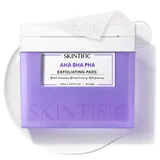
AlgenistBlue Algae Vitamin C Correcting PeelYOUR PRODUCTDermalogicabreakout clearing liquid peelDeviant SkincareGentle Resurfacing LiquidskintificAHA BHA PHA Exfoliating Pads
Match—55%53%52%
Price$85.00$37.50−$47.50$52.00−$33.00$18.90−$66.10
Shared key ingredients—4 of 185 of 186 of 18
Key difference—Lactic AcidLactic AcidNiacinamide
Irritancy High Low Low Medium
Drying alcohol————
View product Shop Shop Shop

More alternatives: Bliss Clear Genius Clarifying Liquid PeelBe Minimalist AHA PHA BHA 32%

Cheaper alternatives? See how this stacks up against similar formulas.
We compare ingredient profiles across our catalog — pick the closest match for your budget.
Open dupe finder

Product summary

"Algenist - Blue Algae Vitamin C Correcting Peel" is effective for: Exfoliation, Evens skin tone, Anti-blemish and Anti-aging

This product could be helpful for: Moisturizing, but its actives are not the most effective or are not well-studied.

Ingredient callouts

  • Exfoliating acids (mandelic acid 0.85% - 1.25% and glycolic acid 2.60% - 4.00%). In this concentration, they will have a noticeable exfoliating effect. They can also have an anti-aging effect and stimulate collagen production in a long-run. PHAs (gluconolactone 2.00% - 3.00%) in this product also work for improving skin hydration. They might be even able to stimulate the production of skin's natural humectants and support the healthy skin microbiome.
  • This product also contains Vitamin C (Ascorbic Acid). It can be an effective active for anti-aging and evening out the skin tone, but in this product it is used for stabilizing other ingredients in the formulation. In this concentration (1.10% - 1.60%) it cannot have a noticeable benefit for the skin.
  • Humectants (sodium hyaluronate 0.15% - 0.55%, parachlorella beijerinckii exopolysaccharides 0.40% - 0.90% and glycerin 22.00% - 33.00%). These ingredients help attract water to the upper layer of the skin and improve the skin hydration.

Price

The product retails from 24.00£ up to 119.00£ in the United Kingdom, from 80.00$ up to 85.00$ in the United States, for 110.00CA$ in Canada and for 790.00HK$ in Hong Kong.

For a detailed price comparison: click here.

Sources cited in this review

Every concentration estimate and effectiveness label is anchored to one of these 44 studies and safety reviews.

  1. 1
  2. 2
  3. 3
  4. 4
  5. 5
  6. 6
Algenist Blue Algae Vitamin C Correcting Peel
AlgenistBlue Algae Vitamin C Correcting Peel

Affiliate links · As an Amazon Associate, WIMJ earns from qualifying purchases.

As an Amazon Associate, WIMJ earns from qualifying purchases.